On confluence, influence and rivalry, and the currents that run between people
TAN DHINGRA
Upon those who step into the same rivers, different and again different waters flow.Heraclitus of Ephesus · fragment 12
Ko au te awa, ko te awa ko au. I am the river, and the river is me.Whanganui iwi, Aotearoa
If we could speak like water, if we could be like a river, we wouldn’t hurt so much.From the opening of the film
for the Magpie, and for whoever drinks downstream
A preface
Before the Water
I had a grant before I had a goal. That is the honest beginning.
In Toronto I lived in an art collective called POM, a loud, half-falling-down house full of people who had arrived from somewhere else and were trying to find their way back to each other and to the land. I had been reading about rivers that courts had declared to be persons, and separately I had been thinking about what it means to be a person at all. One day the two thoughts clicked into the same sentence. A river can be a person. Perhaps a person is also a kind of river.
In February 2021 the Innu Council of Ekuanitshit and the regional municipality of Minganie had declared the Magpie River, on the north shore of the Gulf of St. Lawrence, a legal person. It was given nine rights: to flow, to keep its living diversity, to be free of pollution, to be represented in court by guardians, and more. In the Innu language its name is Muteshekau-shipu. The Innu had never needed a resolution to know the river was alive. The law had only caught up.
Sept 10, 2023 · Toronto
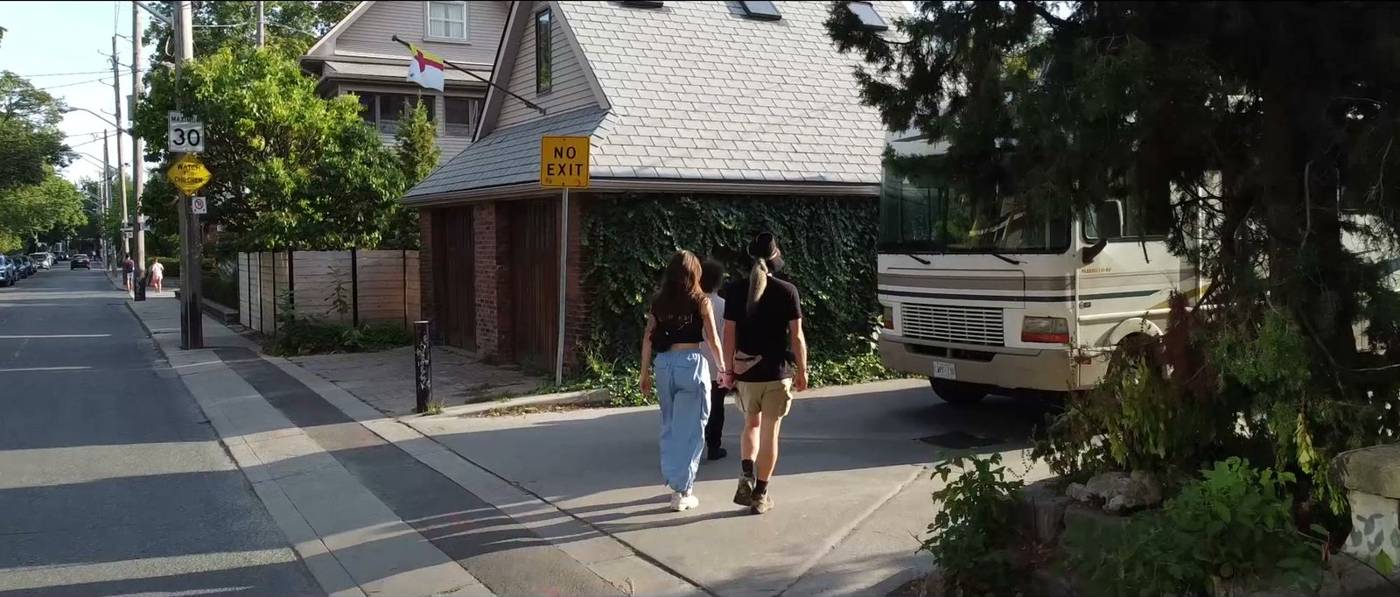
The RV pulls up outside POM. Thirty-two feet of Fleetwood Bounder. A last communal feast in the yard, someone says a blessing for safe passage, and we leave with no plan past the destination.
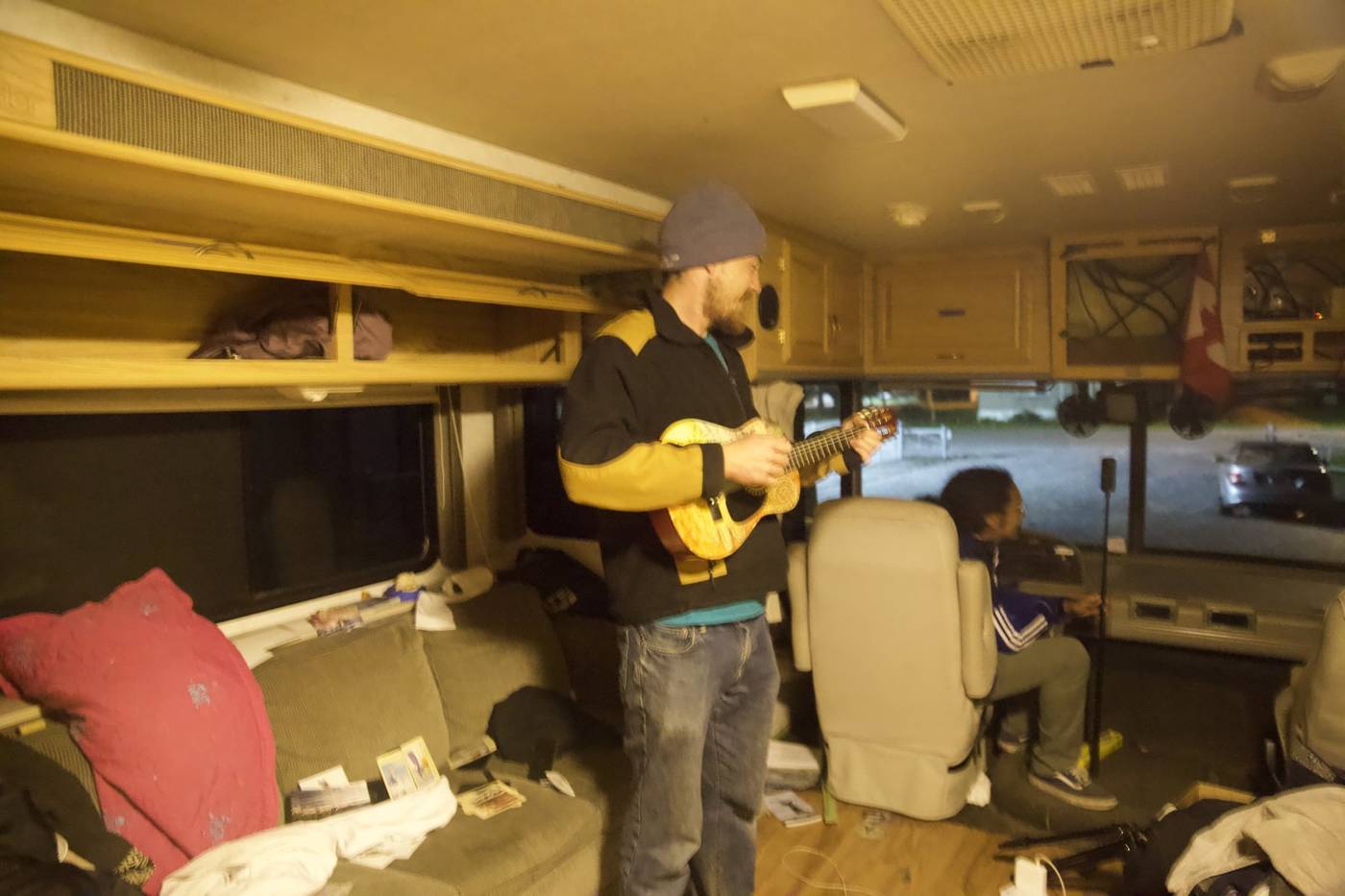
We were a caravan that never held the same shape twice: one motorhome, a van, a couple of cars, and a band of people who joined and left at different rivers. A poet, a philosopher, a river guide, musicians who played live in the Bounder at highway speed, friends who had never been north. Thirteen days up the spine of the St. Lawrence and into the boreal forest. Not everyone who left Toronto reached the Magpie, and not everyone at the Magpie had left Toronto.
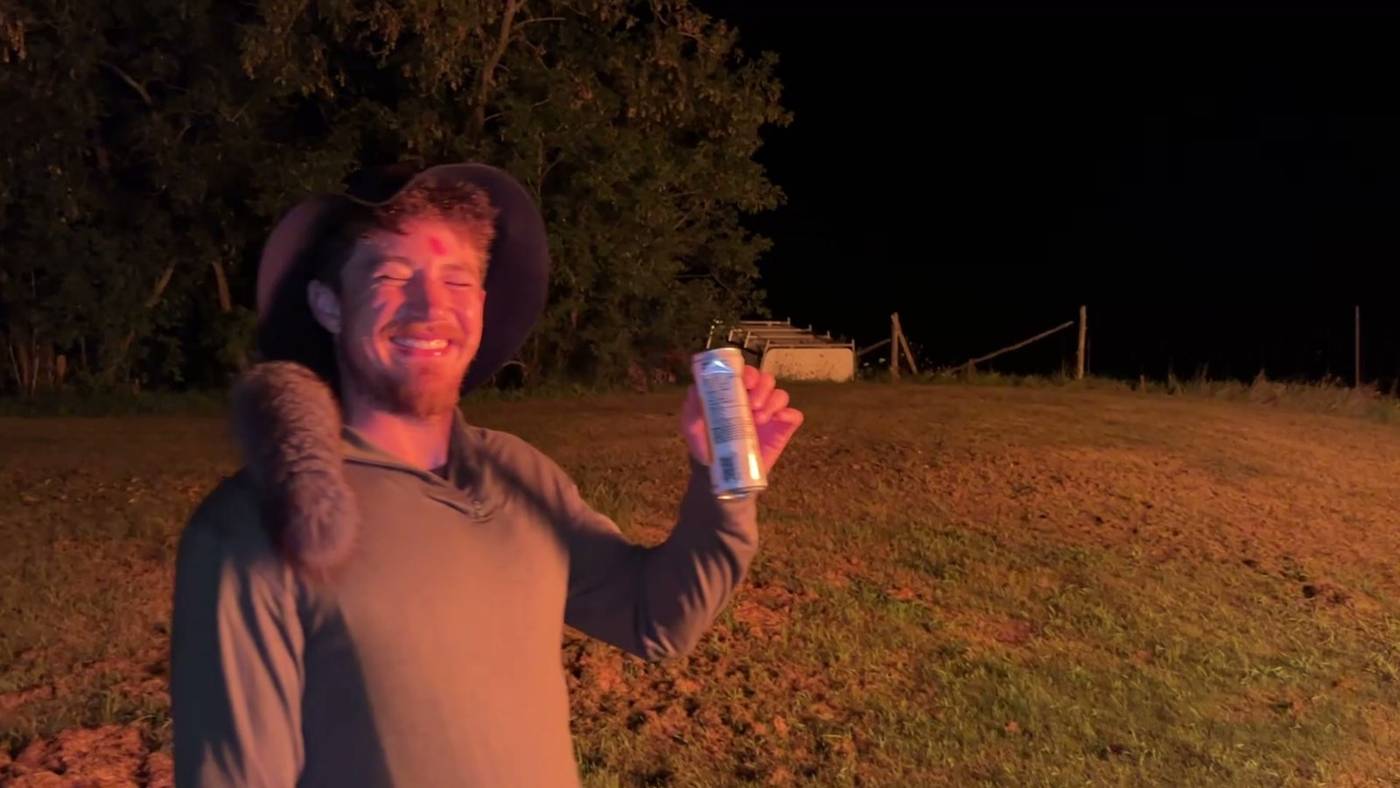
Sept 10: leaving POMCaroline, drawing eddiesTamworth, night 2the soundtrack, live, at speedATTENTIONMAGPIE OUEST →
13 days. 1 RV, 3 breakdowns, no plan past the river
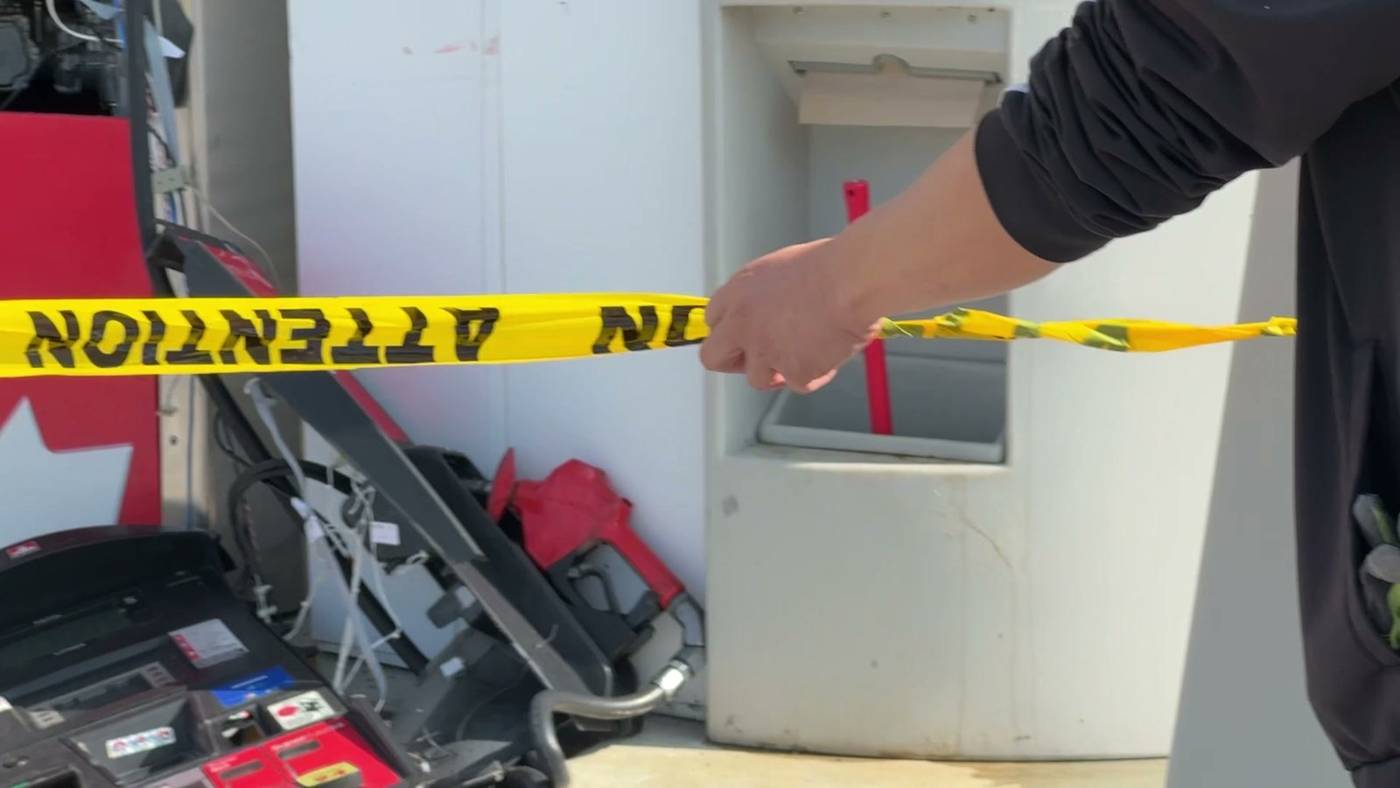
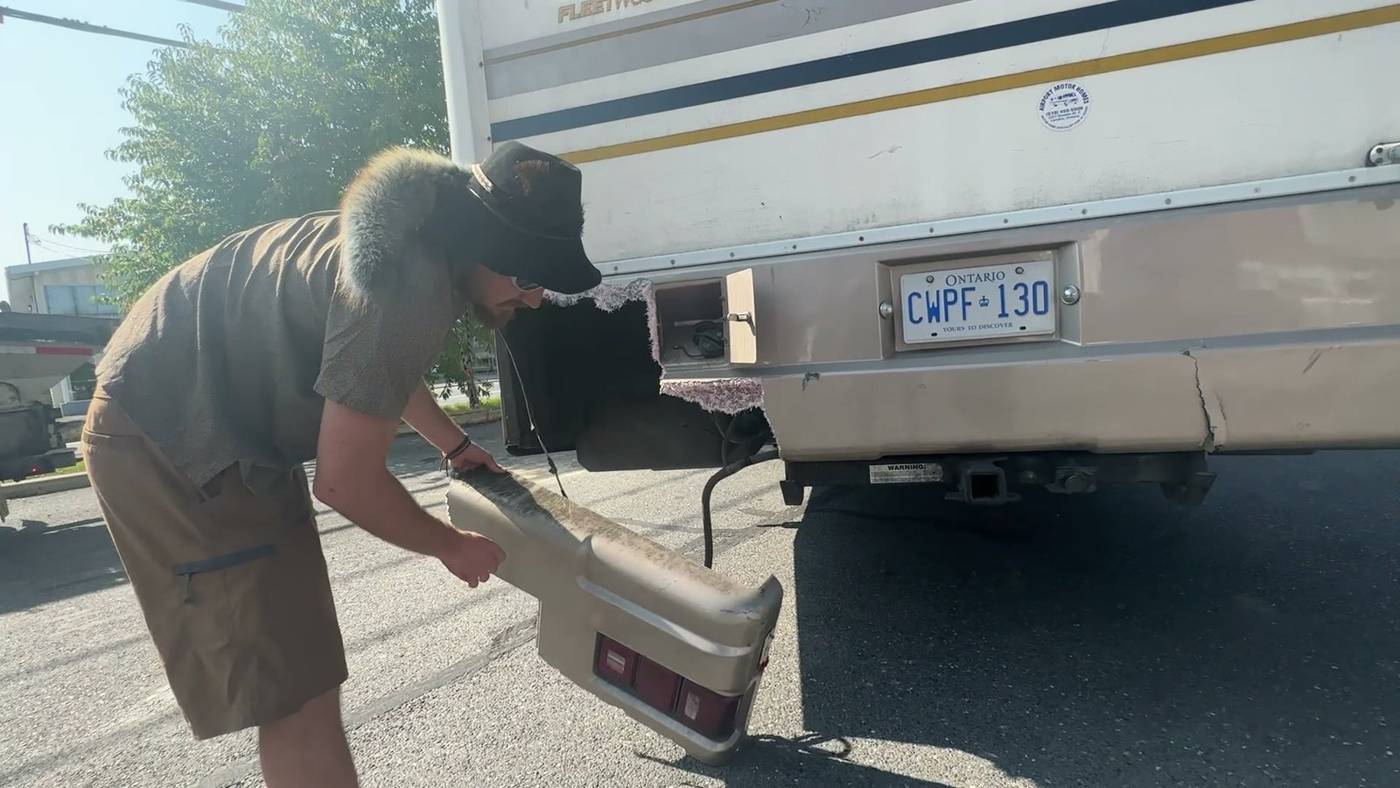
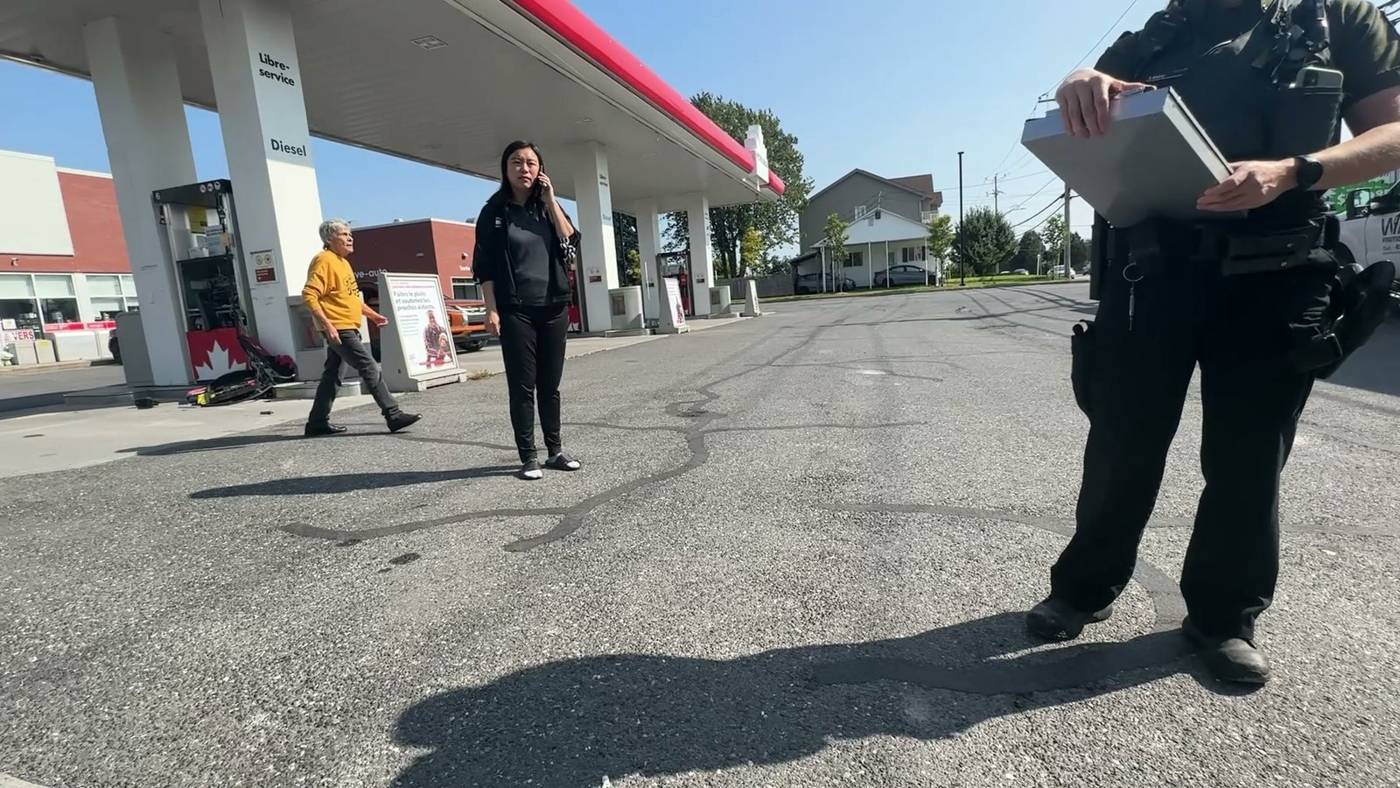
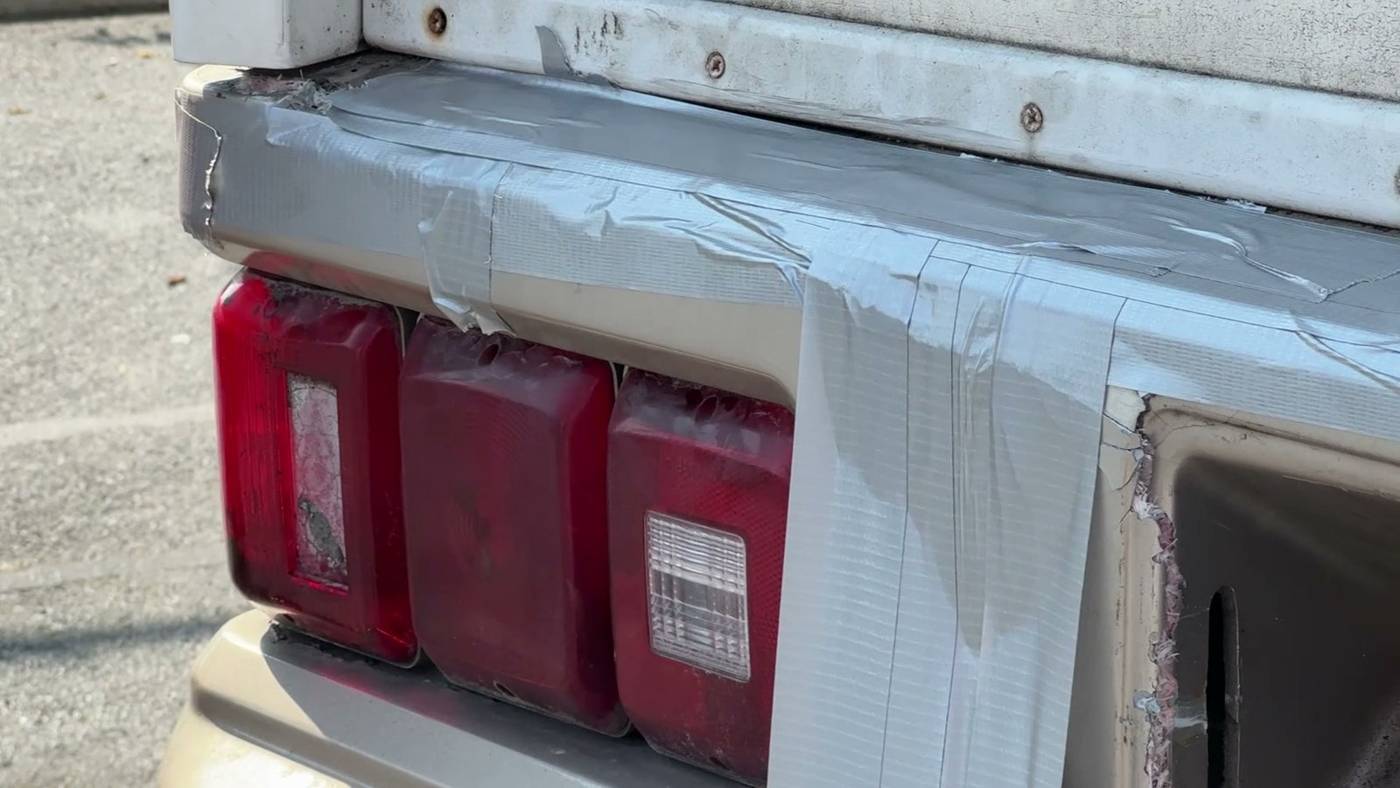
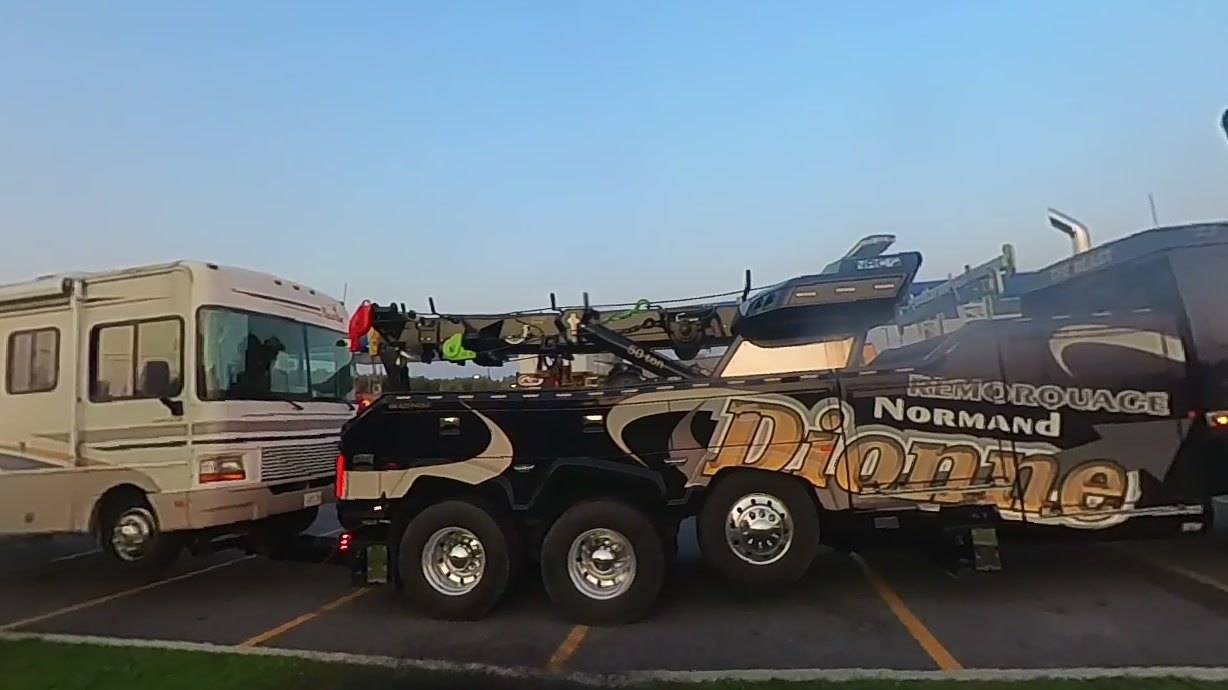
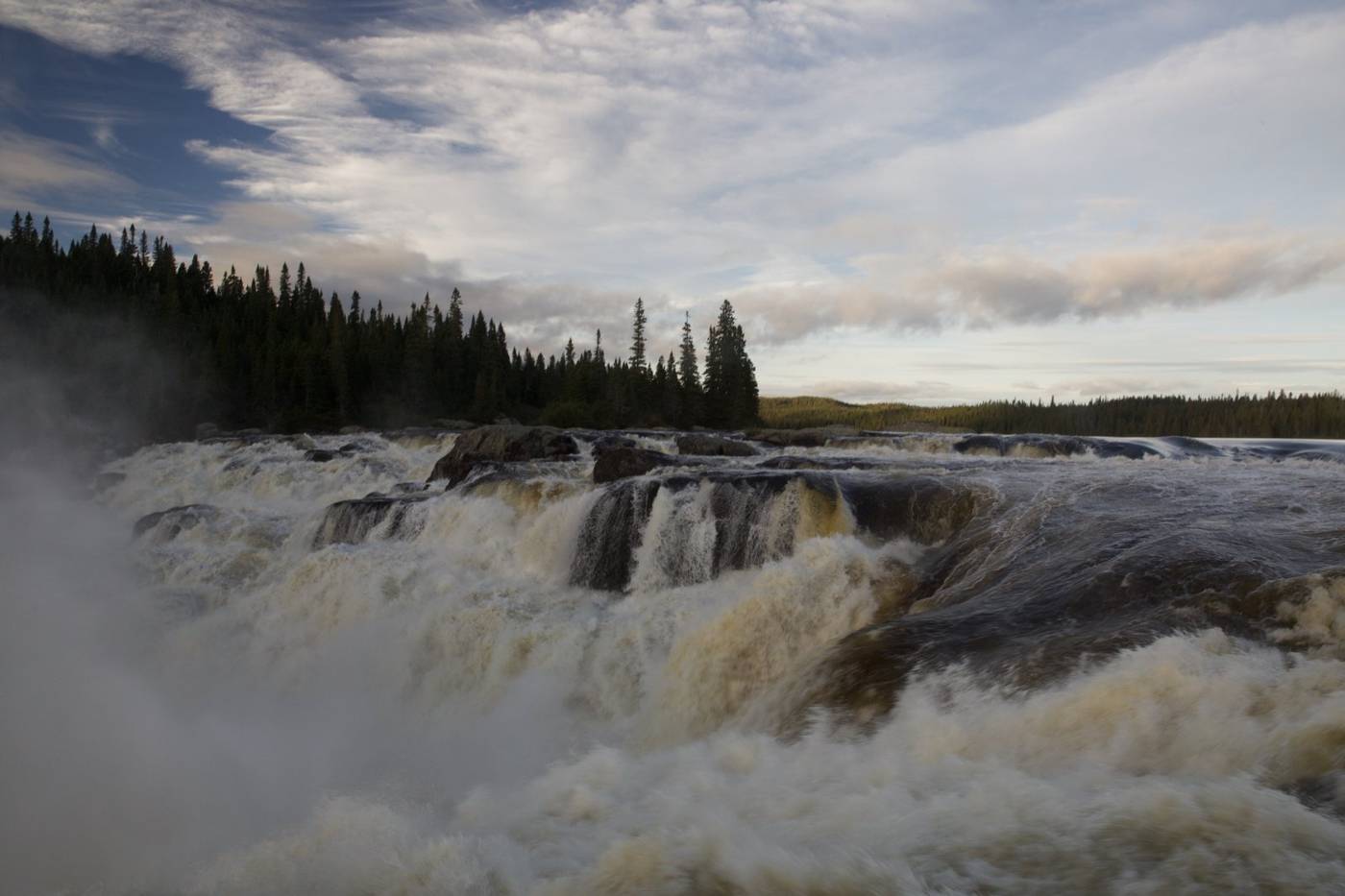
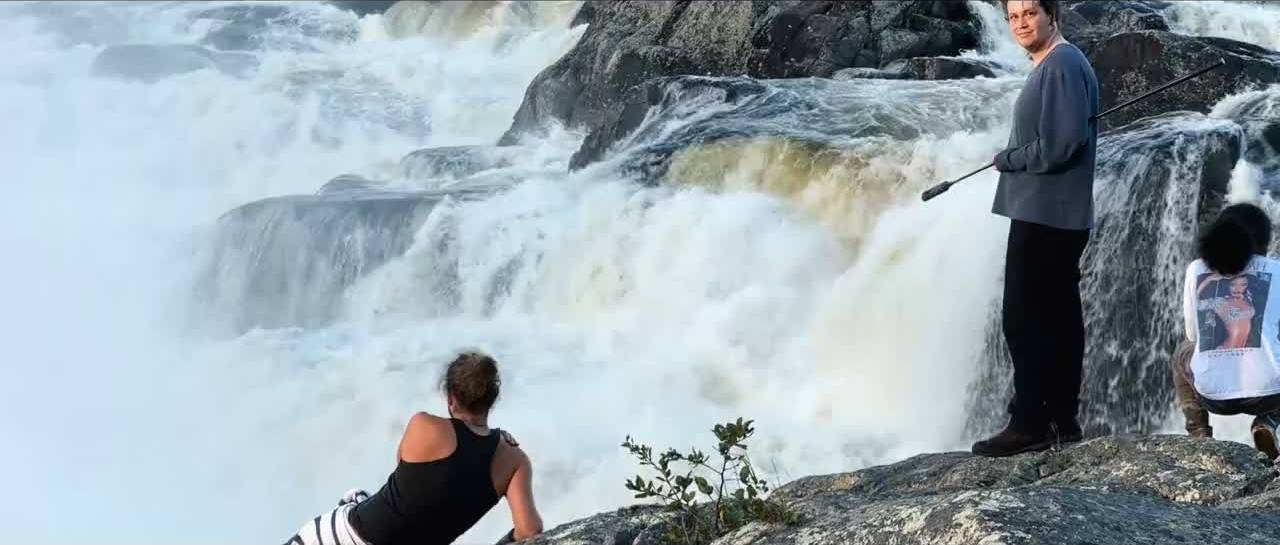
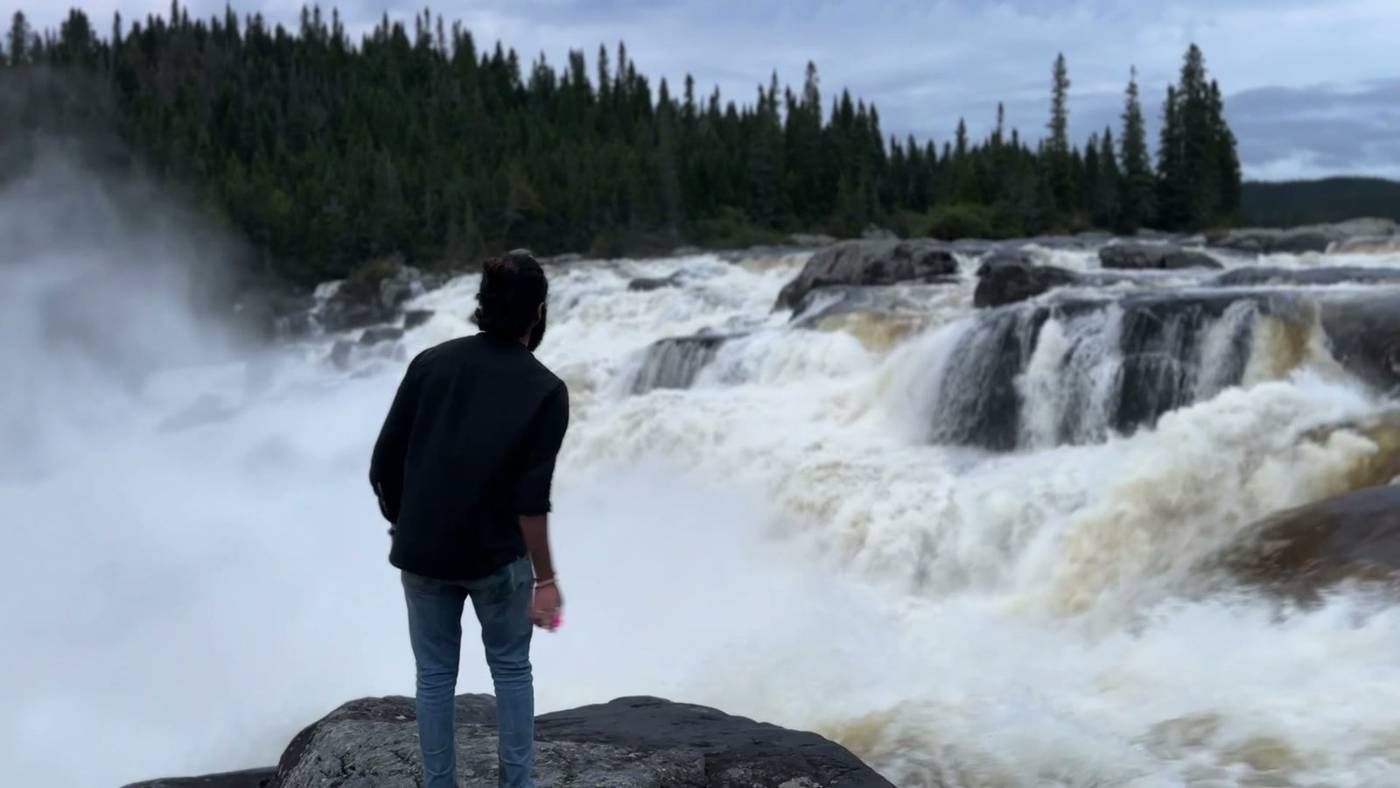
The Bounder tore its own bumper off at a gas station and the police came to write it down. We taped the tail-lights back on with silver tape. A tow truck dragged us into a workshop. We sat at red picnic tables outside a yellow restaurant eating poutine and waiting for a phone to ring. When we finally reached the falls, they were loud and white and indifferent to us. They had been doing this for ten thousand years. Standing in front of them, the argument I had come to make, that a river could be a person, dissolved. She did not care what we called her.
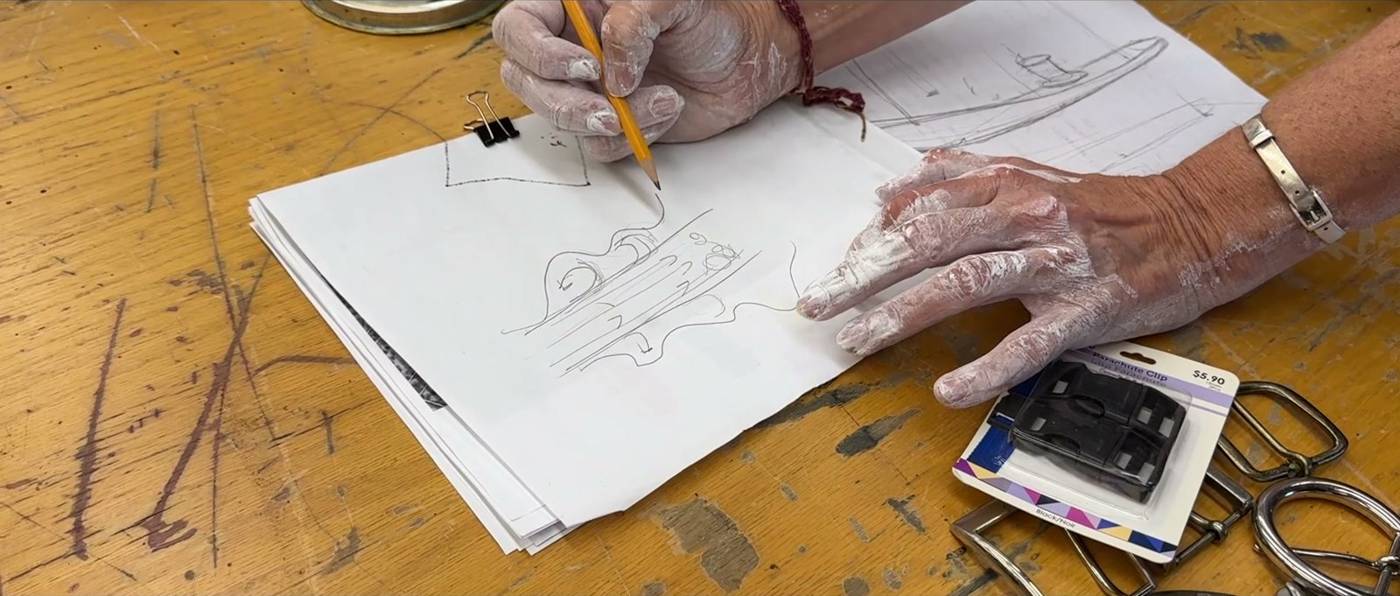
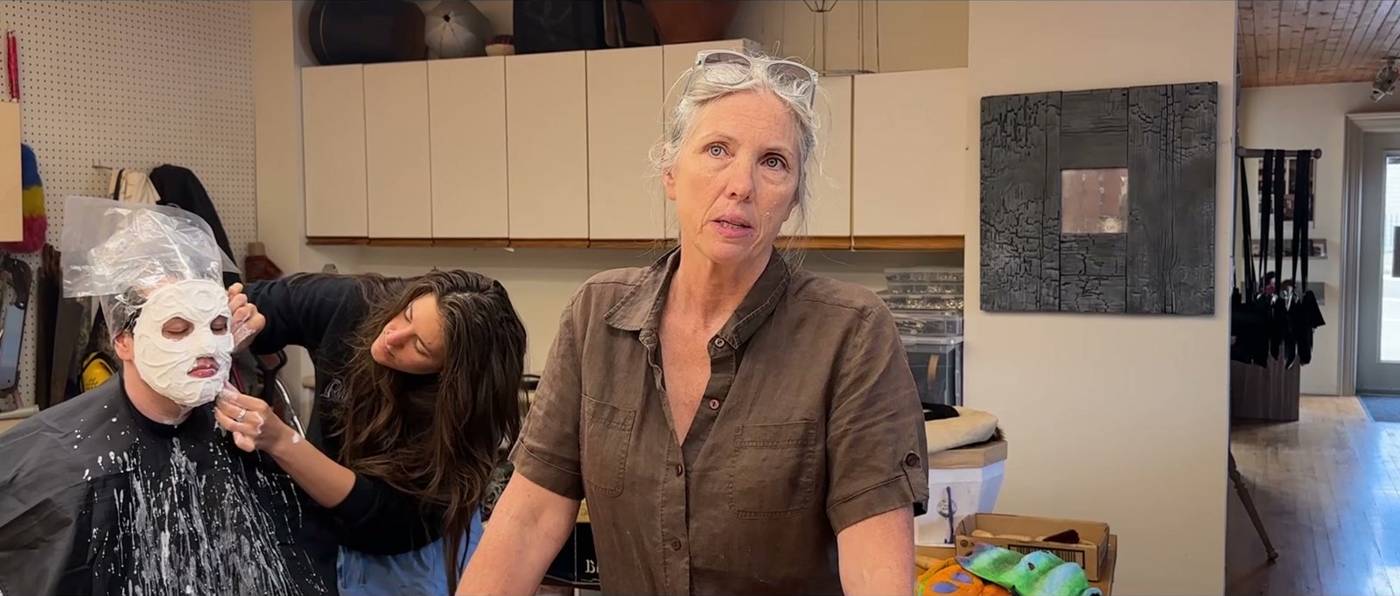
What I took home instead was a vocabulary. Somewhere on the second day, at a farmhouse in Tamworth, an artist named Caroline cast a face in plaster for our film and then, plaster still on her hands, began sketching the river’s shapes on a sheet of paper and talking about eddies and flows. Those scribbles became the film’s field notes, twelve words that rivers use for things that also happen between people: confluence, flow, tributary, eddy, subsume, dam, canal, ephemeral river, consumption, merging, external pressure, and the hardest one, individuality held inside unity.
Caroline’s pencil, more or less. The drawings in this book descend from that sheet of paper.
The film works by what the Mi’kmaw Elder Albert Marshall calls Etuaptmumk, Two-Eyed Seeing: holding the gifts of Western science in one eye and Indigenous knowledge in the other, and using both together. This book tries to see the same way. In each chapter one eye is a hydrologist’s, measuring discharge, silt, gradient and flood. The other is a lover’s, or an elder’s, asking what the water knows about us. Neither eye is asked to see alone.
The language already holds them together. Almost every word we have for how people meet, mix, compete and part was a water word first. Confluence is a flowing together. Influence is a flowing in. A rival drew water from the same stream as you. To arrive was to reach the bank. Currency is a running. We learned how to love, and how to trade, by watching water.
The book has five parts. The first is a grammar of water, the shapes a river takes. The second is its weather: rivalry, flood, drought, the rivers that only run sometimes, the river that turns back, the delta. The third goes to the Punjab, a country named for its five rivers, where everything upstream flows down at last into Sindh. The fourth travels: to the Rhône, to the Cape of Storms, to the water temples of Bali, and through an atlas of the rivers the world has begun to call persons. The fifth follows the river into the bank, because money borrowed its whole vocabulary from the current.
Each chapter ends at the bank, on a yellow page of questions. Take them to your own water. A river does not hurry and neither should you.
Tan
Part One
The Grammar of Water
Six shapes a river takes, and what each one knows about the people we belong to.
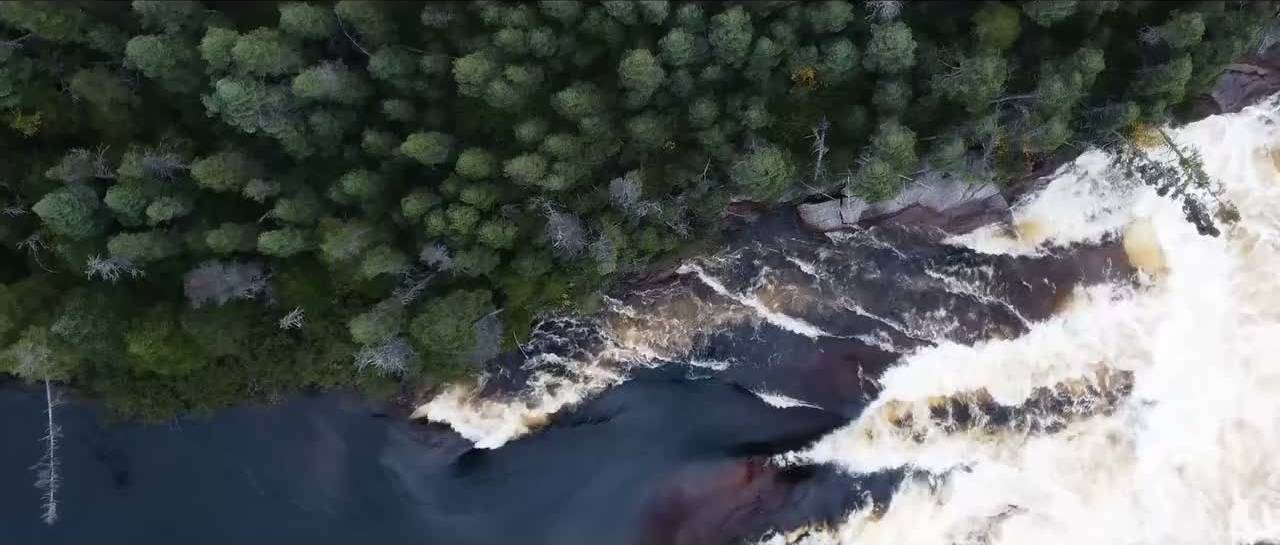
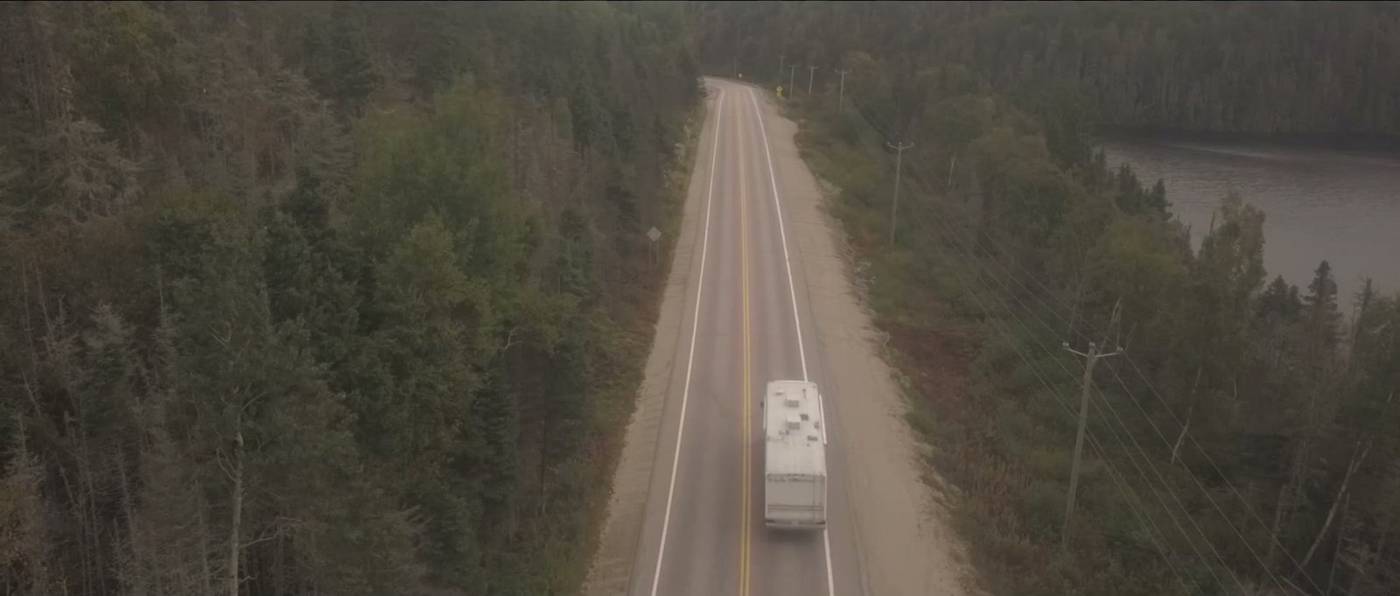
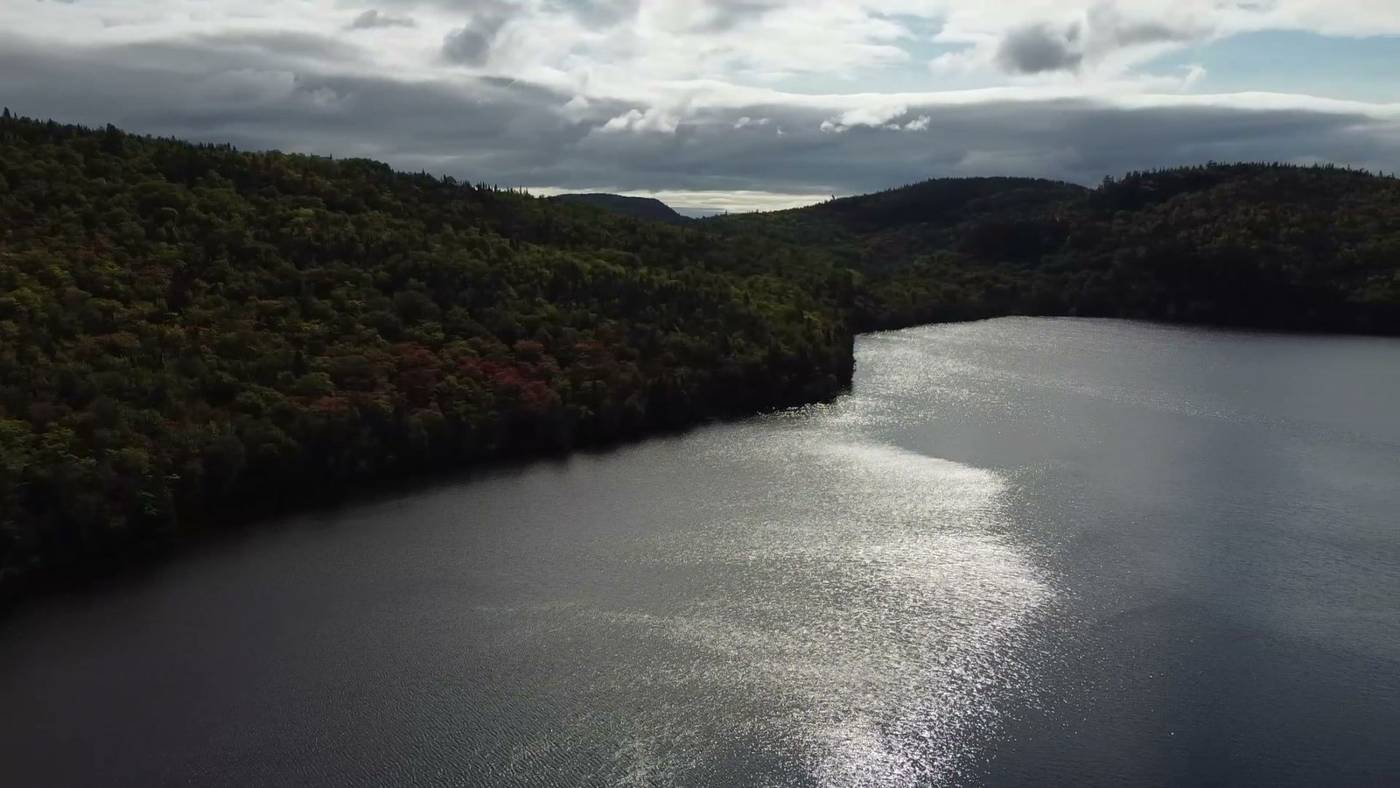
learn the river, learn the relationshipThe Magpie from the drone. Seen from above, a river looks like handwriting.
Chapter i
Source
source · from Old French sourse, a rising, a spring; from Latin surgere, to rise
Every river begins as something else: snow that has finally given up, a spring that has been under pressure in the dark for a thousand years, rain that happened to land on one side of a ridge instead of the other.
Stand at the source of almost any great river and you will be disappointed. The Ganga leaves its glacier at Gaumukh, the cow’s mouth, as a grey torrent of meltwater with no sign of the holiness it will carry to the sea. The Mississippi starts at Lake Itasca as a creek you can cross on stepping stones. Greatness is never visible at the beginning. A river collects it on the way.
People begin the same way. Nobody arrives whole. You are the meltwater of whoever held you, or did not. You carry what went underground in your family before you were born, and the slope of the land you happened to fall on. Long before you chose a lover, a friend or an enemy, your gradient had been chosen for you. Water does not pick its hill.
Hydrologists have a better word for this than psychologists do. A watershed, or catchment, is the whole region of land that drains into one river: the forest that holds the rain, the road that sheds oil into the ditch, the farms and bogs, the town upstream you have never visited. When you meet someone you are meeting a watershed. Everything that has ever drained into them is in the water.
so ask about the forest before you complain about the colour
The Magpie runs dark, the colour of strong tea, because it drains the peat and spruce bogs of the north and carries their tannins all the way to the Gulf. Nothing is wrong with it. It is carrying the forest. Some people arrive dark like that, and you will be tempted to call it pollution. Often it is only where they come from.
Sept 10 · leaving POM
The last feast at the collective, then the road east. A house can be a spring: you can drink from it for years, and you still have to leave it to become a river.
A source gives a river its direction, which is downhill, toward something larger. It does not give it a destination. A spring that stays a spring becomes a well, and wells are for drawing from, not for going anywhere. People who spend their lives at the spring, turning over what their parents did, mistake the beginning of the river for the river. Honour the source. Then leave it. The leaving is how the spring reaches the sea.
Chapter ii
Current
current · from Latin currere, to run. The same root gives course, courier and currency
Around 500 BCE, in the city of Ephesus, a man named Heraclitus wrote a sentence that has outlived the city.
Upon those who step into the same rivers, different and again different waters flow.Fragment 12
We usually flatten it into a proverb, that you cannot step into the same river twice. The fragment says something stranger and kinder. It says there is a same river, and that it stays the same river because its water never does. Its identity is its flow. Stop the flow and you will not get a purer river. You will get a pond, then a marsh, then a meadow with a memory of water in it.
People are currents. The person you married is not the person you married. The friend you have had since you were eleven has been replaced, cell by cell and opinion by opinion, many times over, and is still your friend. The common mistake is to love one afternoon’s water: its level, its temperature, its colour that day, and then to feel betrayed when it moves on. It was always going to move on. What stays is the bed, the course, the shape the flow keeps cutting.
So the useful question is rarely whether someone has changed. They have; all water does. The useful question is whether the river still runs in a direction you can live beside.
In the opening of our film I said something I still believe: that the instant you catch a living thing in language, you still it. You name a person, a feeling, a relationship, and the name makes it clear and visible and also stops it changing. You lose the part of it that was alive. That is how most of us try to love: we name, we fix, we demand that the water hold still so we can be sure of it. A river cannot be held. It can only be followed.
Sept 15 · 22:20 · the road to Tadoussac
A trucker at a pull-off, engine running. He says life is all movement, that every connection is a coming-together and a separation and you don’t get one without the other. Then he climbs back in his cab and goes. We reach Tadoussac at 23:02.
Hydrologists do not measure a river by how much water is sitting in it. They measure discharge: the volume that passes a fixed point each second. Love is discharge too. Couples who keep score by what they have stored, the years, the house, the history, are measuring a reservoir. Measure what passes between you on an ordinary Tuesday: how much attention crosses the table, how much warmth goes one way and comes back. A relationship with an enormous reservoir and almost no discharge is a dam. Dams are impressive. They are not rivers.
Every current also makes eddies. Behind a boulder the water turns back on itself and circles, slow and calm, while the main stream rushes past. Paddlers aim for them. To catch an eddy is to pull your boat out of fast water into a pocket where you can rest and look downstream. Every relationship has its eddies: the argument that comes back each winter, the grief that circles the same rock. Fish rest in eddies. The skill is telling a resting place from a whirlpool, the calm that lets you gather yourself from the spin that pulls you under.
Chapter iii
Banks
riparian · from Latin ripa, a riverbank. And arrive, from arripare, to come to the shore
A river without banks is a flood. Spread across the land it goes shallow, warms, slows and goes stale.
Banks give a river its depth, its speed, its power to roll stone and cut canyons. What looks like a wall from the outside is, from inside the water, the thing that lets you move at all. A person with no boundaries is not more loving. They are shallower and everywhere at once, and nothing can live in them for long.
But a real riverbank is alive, and this is where most advice about boundaries goes wrong. On the outside of every bend the current presses hard and carves the bank away; geologists call it the cut bank. On the inside the water slows and lays down sand, building new land: the point bar. Over centuries a river walks across its valley this way, swinging in long loops called meanders. Sometimes it cuts straight across the neck of a loop and leaves the old bend behind as a crescent lake, an oxbow. The shape that results belongs to neither the river nor the bank. It is the record of their argument, and the argument never ends.
That is what a healthy boundary looks like. It holds and it gives. It is shaped by the person it holds.
In the twentieth century many cities straightened their rivers into concrete. Los Angeles did it after the flood of 1938. The water ran faster and further, and it also flooded harder downstream, because a rigid channel does not stop a flood. It hands the flood to whoever lives further along. Concrete boundaries export a relationship’s floods to the children, to the friends, to the next partner down the valley.
the next house down = the kids
Ecologists call the strip along a river the riparian zone: willow and reed and alder, the wet edge where the forest leans out over the water. It is narrow and it holds a share of a landscape’s life far beyond its size, because it belongs to two worlds at once. The richest place in a relationship is there too. It is the edge where you meet. Look after it. Plant it. Do not pave it.
Sept 16 · Highway 138
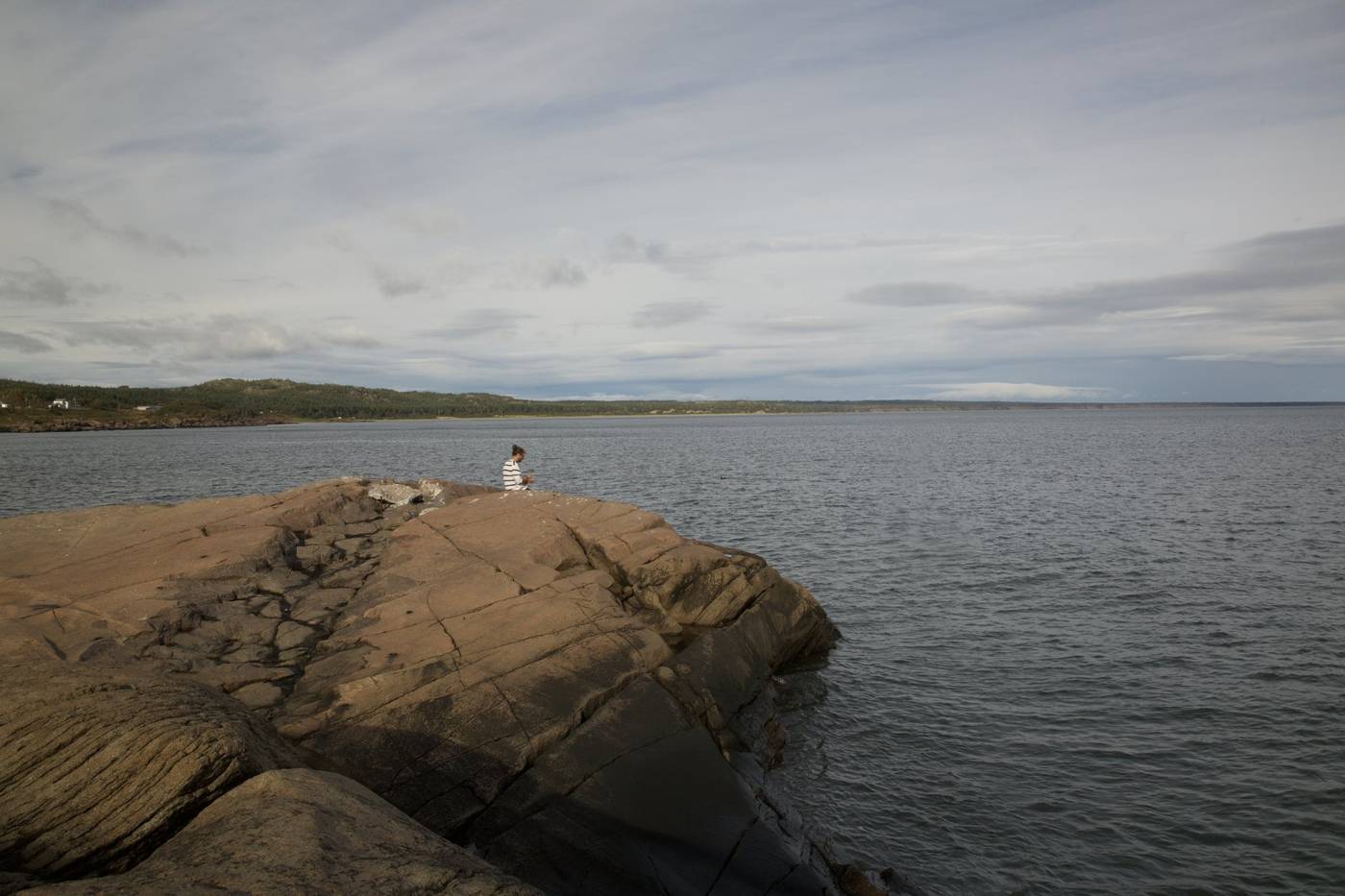
The only road up the north shore, and it only goes one way. For hours it follows the bank of the St. Lawrence, which is so wide here it looks like the sea. The road doesn’t fight the river. It goes where the shore lets it.
The north shore. A bank of bare bedrock, and a river too wide to see across.
Hidden in the bank there is an old word. Arrive comes from a Latin phrase meaning to come to the shore. You have not arrived in a relationship when you have dissolved into someone. You have arrived when you reach their edge, and it holds, and you can step out onto it.
Chapter iv
Canals
canal · from Latin canalis, a pipe, a groove, a channel. In the film’s field notes: waterways we build to connect
Rivers do not meet because they want to. They meet because the land tilts them together. Most rivers on earth will never touch.
The Yangtze and the Yellow River run across China in parallel, hundreds of kilometres apart, each draining its own half of a civilisation. Left alone they would never have met. So people dug. Over more than a thousand years, beginning with short channels in the fifth century BCE and joined into one system under the Sui dynasty around 600 CE, the Grand Canal grew to run some 1,800 kilometres from Hangzhou to Beijing, crossing both great rivers. Rice moved north on it. Armies, poems and taxes moved along it. Two rivers that geography had kept apart were joined by hand, a spadeful at a time.
The film’s field notes define a canal as a waterway we build to connect, and gloss it as “mediation, empathy, the effort of communication: the channels we dig by hand toward one another.” Most relationships between people who matter to each other are like this. The land does not tilt you together. Your families do not overlap, your languages and habits run in parallel. Somebody has to pick up a shovel.
And canals, unlike rivers, need tending. Left alone they silt up. Reeds close them, banks slump, the water goes still and green. Every canal that still works has had people dredging it for centuries. A conversation dug once does not stay open by itself.
The cleverest thing on the Grand Canal was invented there. Where the land rose, boats could not simply climb, and early engineers dragged them up ramps on ropes, often wrecking them. In 984 an official named Qiao Weiyue is credited with building the first pound lock: a chamber with a gate at each end. A boat enters, the gate behind it closes, and water is let in slowly until the chamber stands at the level of the canal ahead. Then the front gate opens and the boat sails on as if there had never been a difference in height.
Here is the whole of empathy in one machine. You cannot jump from your level to someone else’s. Any boat that tries is smashed. You let yourself be enclosed for a while with the difference, and you let the water rise, slowly, until you are standing where they stand. Only then does a gate open.
Sept 12–14 · Montréal
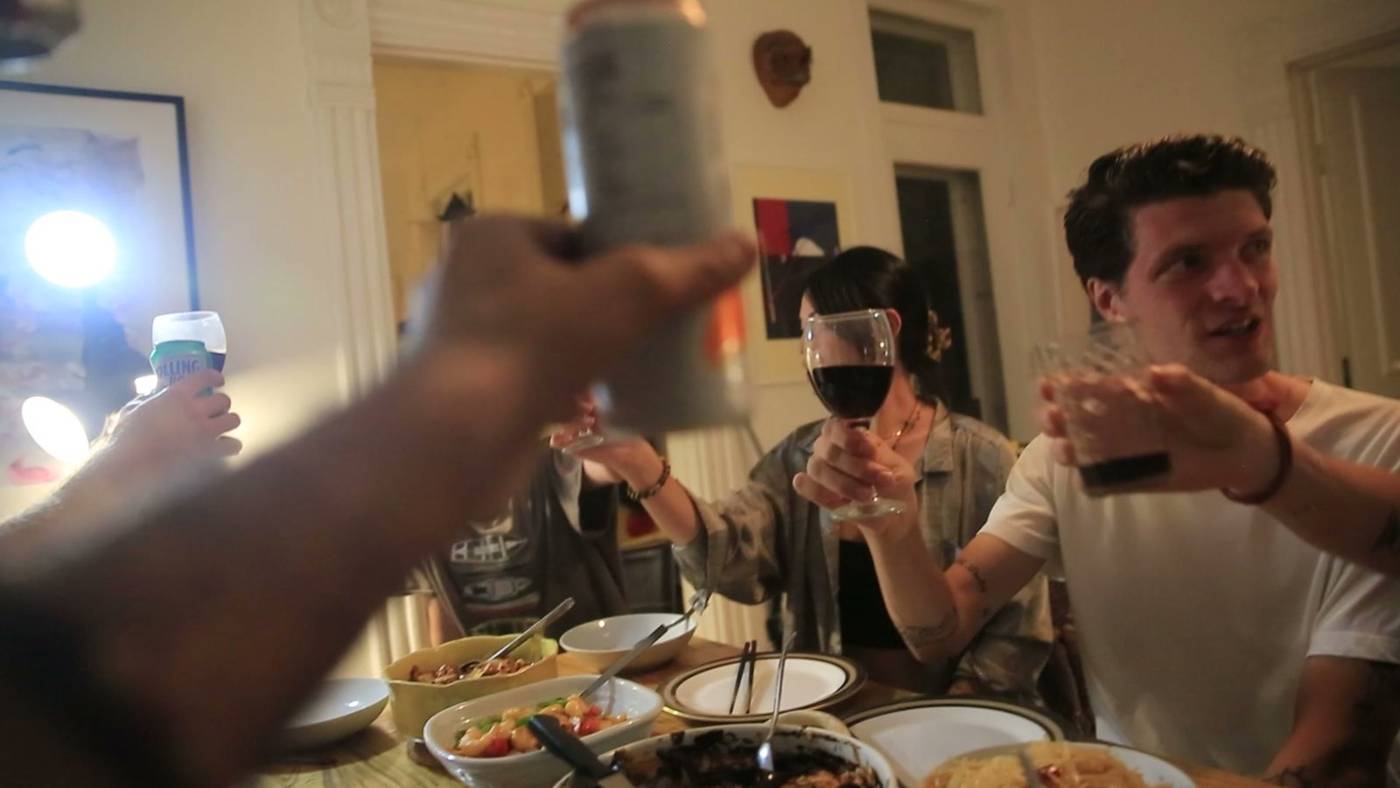
Dinner at Leo’s mother’s house, one of the warmest nights of the trip. Antoine joins us here for the run north. Someone at the table is still wearing the mask from Tamworth during the toast. A house full of people who had never met, and by the end of the meal it didn’t feel that way.
Montréal. The toast, and the long dig toward strangers.
Chapter v
Confluence
confluence · from Latin con, together, and fluere, to flow
Near Manaus, in the middle of the Amazon, the black Rio Negro meets the pale, sandy Solimões, and for kilometres they do not mix.
The two waters run side by side in a single bed, a seam drawn down the middle, black on one side and café-au-lait on the other. They differ in temperature, in speed, in what they carry, and so they stay apart long after they have joined. Locals call it the Meeting of Waters, and boats take tourists out to put one hand in each. At Geneva the clear Rhône and the grey Arve do the same thing on a smaller scale; we will go there in Part Four.
Anyone who has been in love recognises that seam. You are in one bed now. You are not one water.
The early years of any real union are the seam, and couples panic about it: three years together and we are still so different. This misunderstands how confluence works. Two waters do not mix because they share a bed. They mix through turbulence, in the rapids and bends where the current folds over on itself. Smooth water keeps them apart. The hard miles braid them together.
At Prayagraj in India the Ganga and the Yamuna meet, one pale and one dark, and tradition holds that a third river joins them there unseen, the Saraswati, flowing underground. Pilgrims call the meeting place Triveni Sangam, the confluence of three. I love that the holiest confluence on earth includes a river nobody can see. Every confluence has a third water. Two people bring two rivers, and between them, out of sight, runs a third thing that neither brought and both make: the relationship itself. You only know it is there because the river downstream is more than the two you watched arrive.
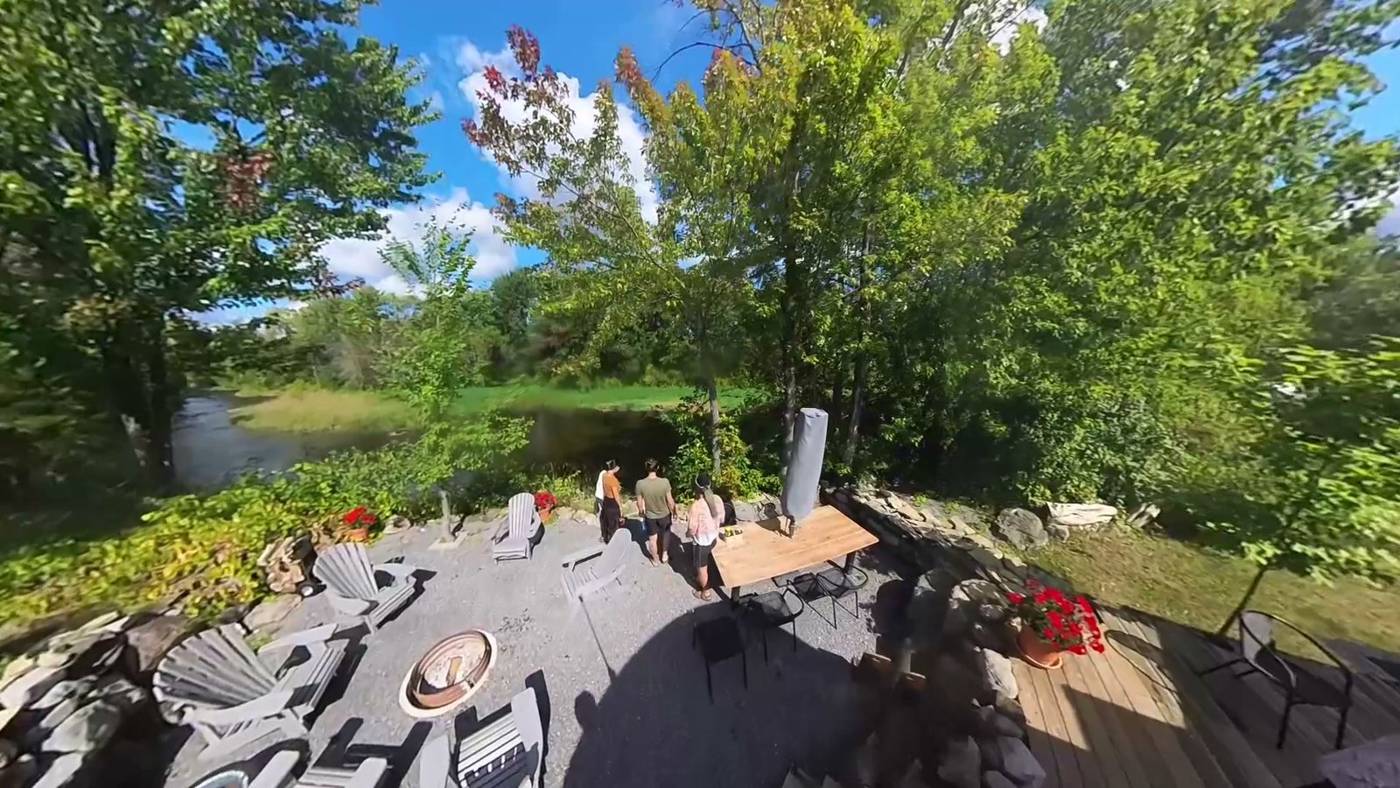
Sept 10 · Tamworth, the circle
At Caroline’s, by the fire pit, everyone sets an intention and says why they came. Nobody has a plan past the destination. Different reasons, poured into the same circle. We decide to let the story arrive as it comes.
Tamworth. The sharing circle, where the tributaries first met.
Then comes the question of the name. Below a confluence the river usually keeps only one of its names. The Arve vanishes into the Rhône; the Solimões becomes the Amazon. Measured from its furthest source, the Missouri is longer than the Mississippi above their meeting point, and by that logic the river reaching New Orleans should carry the Missouri’s name. It doesn’t. Whose name continues is decided by history, power and who drew the first map.
The film’s notes distinguish two ways one water can take in another. Subsumption: the smaller river becomes part of the larger without ceasing to exist; its silt is still in the bed a hundred kilometres down. And consumption: “letting go of a separate self for the sake of a deeper, unified one.” Both happen in love, and they feel different from the inside. Subsumption keeps you. Consumption asks you to let go. A good confluence lets one name continue while honouring that both waters are in it. A bad one pretends the tributary never existed.
whose name does the river carry below your confluence?
Chapter vi
Influence
influence · from Medieval Latin influentia, a flowing in: an astrologer’s word for a fluid streaming from the stars into human beings
Medieval astrologers believed an invisible fluid poured down from the planets into every person and shaped their temper, their luck and their fate. They called it influentia, a flowing in.
We kept the word and forgot the river inside it. To influence someone was, first, to flow into them.
Every great river is mostly other rivers. The Amazon gathers more than a thousand tributaries; the water reaching the sea at Belém fell as rain on Peru and Colombia and Bolivia and ran through hundreds of smaller rivers with their own names first. The film’s notes call tributaries “the smaller loves that pour themselves into the larger flow of a life”: friendships, families, the people who are not the main channel but without whom there would be no main channel.
This cuts both ways. A river that refuses every tributary stays a creek. A river that takes in every drain and ditch becomes a sewer. Its health depends less on how much flows in than on what happens to the water before it arrives. That is the work of wetlands. Marshes and bogs slow incoming water, let the silt settle and let reed roots pull out the poisons, so that what reaches the main channel is clean. Ecologists call wetlands the kidneys of a landscape.
A relationship needs wetlands: slow places where what flows in from outside, the families, the phones, the work, the old loves, can settle before it reaches the centre. Let every tributary pour straight in and the river will carry things neither of you chose: someone’s mother’s fear, a colleague’s contempt, a stranger’s comparison. Slow it down. Let it settle. Then let it in.
Some influence is invisible. Over the Amazon, the forest breathes. Each large tree draws water up from the soil and releases it into the air, hundreds of litres a day, and the vapour from the whole forest moves west and south on the wind in currents scientists call flying rivers, carrying rain thousands of kilometres to farms and cities that have never seen the forest. The people of São Paulo drink water a forest breathed out. Nearly everyone you love has been rained on by someone they will never meet.
~ ~ ~
And you are someone’s tributary. From 1962 to 1970 a paper mill at Dryden, in northwestern Ontario, released around ten tonnes of mercury into the Wabigoon River. The poison did not stay at Dryden. It travelled downstream into the English River system and into the fish the Anishinaabe people of Grassy Narrows had eaten for generations. Children there are still born with its marks. The men who ran the mill may never have seen the people who drank below. The Wabigoon is where our second chapter goes.
Sept 11 · Tamworth → Sept 18 · the Magpie
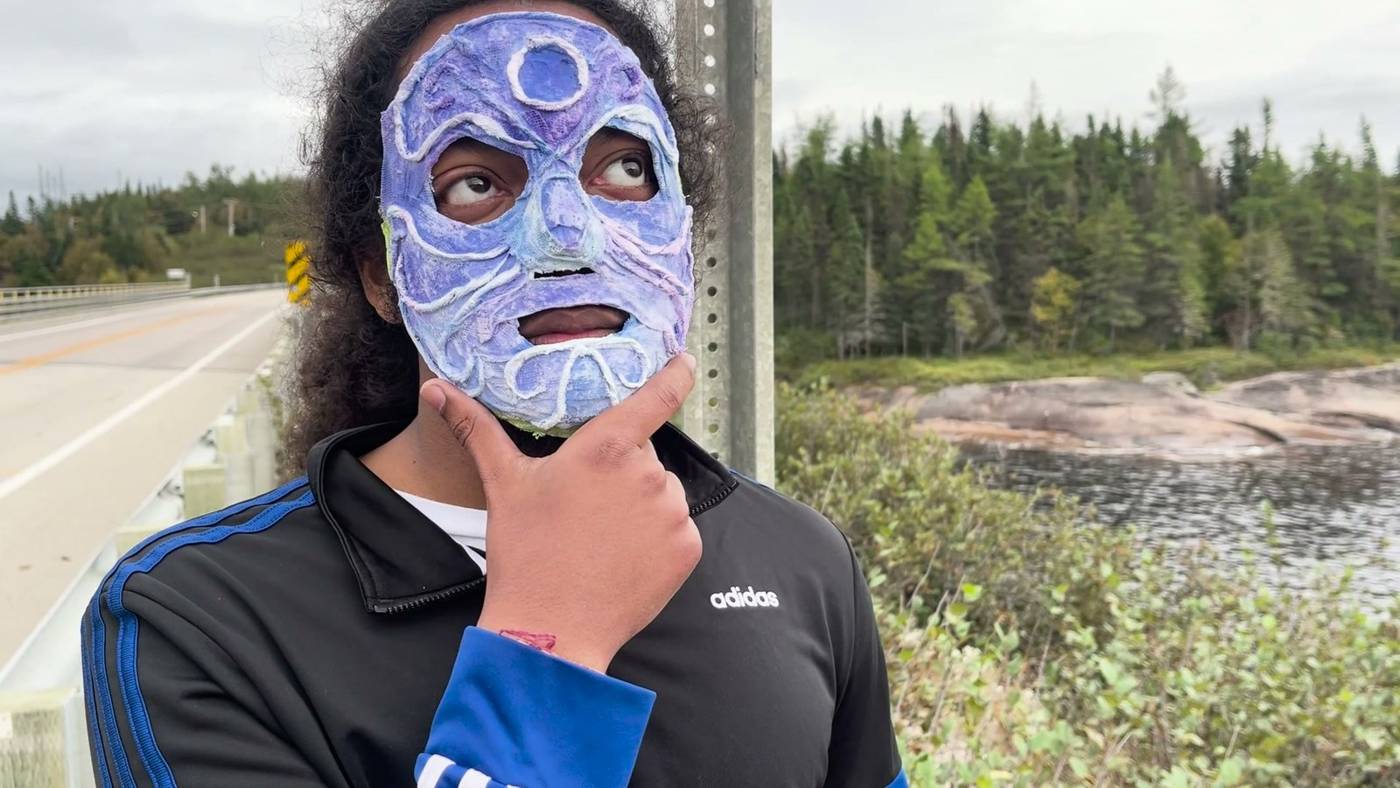
Caroline casts a face in plaster and paints it blue. It rides north in the Bounder for 1,200 km. At the river we pass it around. Each of us puts it on and stands in front of the water wearing someone else’s face. You borrow a face, and for a minute you stop defending your own.
Tamworth: the castthe Côte-Nord: someone else’s face
That is the other side of influence. We cannot stop flowing into each other, so the question is what we carry. The mask carried something good: for a moment, the experience of looking out from another face. Before you flow into anyone, ask what is in your water.
Part Two
Weather
What happens to rivers, and to us, over time: rivalry, flood and drought, the waters that come and go, the river that turns back, and the end.
every bond must weather the weather
Chapter vii
Rivalry
rival · from Latin rivalis, one who uses the same stream as another, from rivus, a brook. And derive, from de rivo, to draw water off from a stream
In Latin a rivus was a brook, and a rivalis was the person who drew water from the same brook as you.
That is the whole history of the word. Rivals were neighbours along one stream: the people you would fight in a drought and need in a flood. You did not have rivals on another river. You had strangers there.
Underneath every rivalry, then, is shared dependence. We compete only with the people who drink from what we drink from. The brother who wanted the same father. The colleague who wants the same promotion. The friend who loves the same person. The partner who wants the same money, the same evening, the same quiet hour, the same attention from the same children. Rivals are upstream and downstream of each other on one water, which is exactly why it hurts.
The Rigveda, the oldest scripture of the Punjab, remembers a war fought on a river, the Battle of the Ten Kings, on the Paruṣṇī, the river we now call the Ravi. The hymn remembers the defeated kings drowning in it. The river was the prize, and the river was the grave.
A rivalry turns poisonous when the rivals forget the stream. They come to believe the fight is about the other person: the brother’s arrogance, the colleague’s ambition, the partner’s selfishness. It almost never is. It is about the water, and the water is scarce or feels scarce, and both of them are thirsty. The way out of a rivalry is rarely to win it. It is to look down at the stream together and ask what you both drink from, and how to keep it flowing.
look at the stream, not at each other
There is grace in the old meaning. Two people who share a stream are condemned to negotiate. They cannot simply leave each other, because they cannot leave the water. That sentence is also a gift. Nations that share a river have signed treaties that outlasted wars, and in Part Four we will watch two of the most orderly countries in Europe take fourteen years to agree how to share one lake. Siblings who share a mother come back to the kitchen table. The shared stream keeps rivals at the table long after pride would have walked away.
And then there is derive, which once meant to dig a channel and lead water away from someone else’s stream. Every idea you have derived, every habit and way of loving, was drawn off from somebody else’s river. Even the people you compete with have watered you. Especially them.
Sept 19–22 · the return
Coming home, the caravan does what rivers do. Some relationships fray; some re-form in new shapes. Three breakdowns on the way back, the human kind. We are all thirsty and tired and drawing on the same small supply of patience in the same small motorhome.
Chapter viii
Flood and Drought
Kemet · the ancient Egyptians’ name for their country: the Black Land, after the dark silt the Nile’s flood left each year
A river can fail in two ways. It can bring too much, or too little.
The psychologist John Gottman, who spent decades watching couples argue in a laboratory with their heart rates on a screen, described the first failure with a hydrologist’s word. He called it flooding. In the middle of a fight one partner’s pulse climbs past about a hundred beats a minute, the body fills with the chemistry of danger, and the person can no longer take in what is being said. They are not choosing to be unreasonable. They are underwater.
His advice is what anyone on a floodplain already knows. When the river rises, do not argue with it. Go to high ground. Take at least twenty minutes apart, doing something that calms the body, and wait for the water to drop before you come back to the conversation.
Sept 15 · somewhere north of Québec
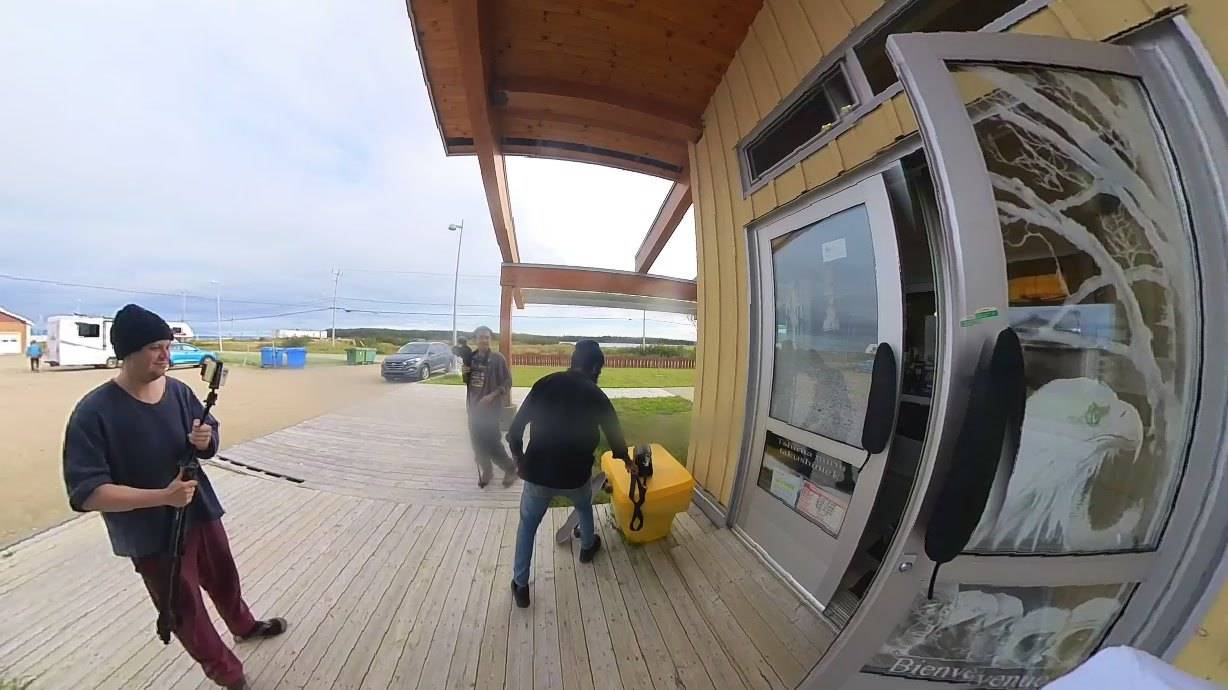
The Bounder tears its own rear bumper off at the pumps. The police come and write a report. Caution tape across the engine bay. Duct tape over the tail-lights. A tow truck, a repair shop, a technician. Then poutine at a yellow restaurant while the engine cools, because when the Bounder stops, the trip stops, and you sit on the grass.
it came off at the pumpssomebody official wrote it downholdingRemorquage Normandcurds, gravy, peas. high ground.
The breakdown days taught Gottman’s lesson better than his book does. When everything floods, you stop, sit on the grass, eat something, and wait for the water to drop.
Floods are also how a river gives. For thousands of years the Nile rose each summer, spilled over its banks and laid a layer of black silt across the valley. When the water drew back, the land was renewed. The Egyptians named their country after that silt: Kemet, the Black Land. A Nile that never flooded would have meant a desert. A relationship that never floods may be one that is never fed. The answer is not to wall off every feeling. It is to build a floodplain, a life with enough room at its edges that when feeling overflows it spreads out, slows, and leaves something fertile behind.
Too much can also suffocate. The Mar Menor, a saltwater lagoon on the coast of Murcia in Spain, was fed for decades with fertiliser washing off the farms around it. The nutrients fed an explosion of algae, the algae died and rotted, and the rot used up the oxygen. In 2019, and again in 2021, tonnes of dead fish washed onto its beaches. The lagoon had not been starved. It had been overfed until it could not breathe. Some love is like that: so much attention, so much need poured in, that nothing in the water can get a breath.
~ ~ ~
Drought is the slower failure, and the more common. Nobody notices a drought on its first day. The level drops a centimetre, then another. The shore moves out so gradually that the people beside it only notice when a boat that used to float is lying in the mud.
The Aral Sea, between Kazakhstan and Uzbekistan, was once the fourth-largest lake on earth. In the 1960s planners began diverting its two great rivers, the Amu Darya and the Syr Darya, to grow cotton. Within a single lifetime most of the sea was gone. Fishing boats still rust on sand many kilometres from any shore. Nobody decided to kill the Aral Sea. Thousands of people decided, one at a time, to take a little more water for something that mattered to them. That is how most relationships dry up. There is no single betrayal, only a thousand reasonable diversions: the job that needed more, the child who needed more, the screen that asked for an hour, the tiredness that asked for silence. Each was defensible. Together they emptied the sea.
Chapter ix
Ephemeral Rivers
ephemeral · from Greek ephēmeros, lasting a day. In hydrology, a river that flows only after rain. In the film’s notes: fleeting encounters that leave a permanent mark
Most of the rivers on earth are dry most of the time.
Hydrologists divide rivers into perennial ones, which always flow, intermittent ones, which flow for part of the year, and ephemeral ones, which flow only for hours or days after rain. In deserts the ephemeral river is the rule. The Arabs call such a riverbed a wadi; in the American Southwest it is an arroyo; in Australia, a creek that is mostly sand. You can walk down the middle of one for years. Then a storm breaks fifty kilometres away, and a wall of brown water comes down the bed in an afternoon, and the next morning the desert is green.
In Alice Springs, in the middle of Australia, the Todd River is dry almost all year, so every year the town holds a boat race on it. The Henley-on-Todd Regatta is run on sand, in boats with no bottoms: the crews stand inside the hulls and run, carrying them. It has been called off for many reasons over the decades. Only once, in 1993, was it cancelled because there was water in the river.
I think about that regatta whenever I meet someone who has organised a whole life around an absence. A town so used to a dry river that the water, when it came, was the problem. Some people are like this about love. They have learned to run on sand, they are good at it, they have a festival for it, and when the river finally flows they cancel the race.
The film’s notes say ephemeral rivers are “fleeting encounters that leave a permanent mark, though they were never meant to last.” A summer. A friendship at a strange time of life. Someone you sat beside on a long journey. Desert ecologists will tell you that ephemeral rivers do enormous work for how briefly they run. Seeds that have waited years in the sand germinate in a week. Toads that have slept underground climb out, breed, and bury themselves again. Everything that lives in a desert has learned to make the most of water that will not stay.
Sept 12–17 · the caravan changes shape
Celina rides with us from Toronto to Montréal and gets out. Antoine gets in at Montréal. Others turn back at Québec City. At Sept-Îles we meet Hayden, who had never been part of the plan, and his drone goes up and stays up all the way to the river. The group that reaches the Magpie is not the group that left Toronto.
Hayden’s drone. The Bounder alone on 138.
An ephemeral river is not a failed river. It is a river that runs exactly as long as it runs. Do not measure it against the perennial ones. Measure it by what is green the morning after.
Chapter x
The River That Turns Back
Tonlé Sap · in Khmer, “large freshwater river.” Each year it changes direction
In Cambodia there is a river that flows one way for half the year and the other way for the other half.
The Tonlé Sap links a great lake to the Mekong. For most of the dry season it does what rivers do, draining the lake down into the Mekong and on toward the sea. Then the monsoon comes. Rain and snowmelt from as far away as Tibet swell the Mekong until it rises higher than its own tributary, and the bigger river pushes the smaller one backward. The Tonlé Sap reverses. For months it flows uphill into the lake, which swells to several times its dry-season size and floods the forests around it. Fish swim into the drowned forest to breed. When the rains end and the Mekong drops, the river turns again and the lake gives back what it held.
At the end of October or early November, at the full moon, Cambodia celebrates with Bon Om Touk, the water festival: three days of long-boat races in Phnom Penh, lights on the water, and the cutting of a vine strung across the river.
I can think of no clearer picture of reciprocity. There are seasons in every relationship when one person’s life floods: an illness, a death, a child, a collapse at work. Their river rises so high that it pushes back into yours. For a while you are the lake. You hold what they cannot. Your banks go under, your life swells to several times its size, and nothing flows the way it used to. If you are lucky, and if the relationship is healthy, the season turns. Their river drops. What you held flows back, carrying the fish that grew up in your flooded forest.
The danger is a river that only ever reverses one way: one partner always the Mekong, the other always the lake. That is not reciprocity. It is a reservoir with a pretty name. Scientists have begun to warn that dams upstream on the Mekong are weakening the Tonlé Sap’s reversal. When the great river is held back far away, the small river forgets how to turn.
which of you is the lake, this season?
Sept 19 · turning for home
We leave the river. Tadoussac again, a lakeside camp in Charlevoix, Québec City, Trois-Rivières, Kingston. The same road, run backwards, and it is a different road.
Chapter xi
Delta
delta · the Greek letter Δ, which Greek travellers saw in the triangle of land at the mouth of the Nile
Rivers end by dividing.
As a river nears the sea the land flattens, the current slows, and the river lets go of everything it has been carrying: sand from the mountains, silt from the plains, the leaves and seeds of a thousand kilometres of forest. Dropped in its own path, that load splits the river into channels, the channels split again, and a fan of new land grows out into the sea. Greek visitors to Egypt saw the shape of their letter in it, and the name stayed.
The end of a river is the most fertile place it ever makes. The deltas of the Nile, the Ganges and the Mekong feed hundreds of millions of people. We imagine the end of a relationship as a river stopping. Rivers do not stop. They spread out, give away what they carried, and enter something larger. A good ending is a delta: slow, branching, generous, leaving what it carried where something else can grow.
The north shore. Where the river gives itself to the sea.
Some rivers never reach the sea. The Okavango rises in the highlands of Angola and flows south into Botswana, and in the middle of the Kalahari it spreads out and disappears into the sand. It makes one of the richest wetlands in Africa, elephants and lions and some four hundred kinds of birds, all living on water that never arrived anywhere. Some loves never arrive anywhere either. They never marry, never move in, never outlast a summer. They are the Okavango. Whole lives can be fed by water that went nowhere.
~ ~ ~
There is an old parable, told in many versions, about the two seas of the Holy Land. The Jordan River runs down through the Sea of Galilee and out the other end, and Galilee is full of fish; fishermen have worked it since before the Gospels. Then the Jordan runs on south into the Dead Sea, and there it stops. The Dead Sea has no outlet. Water arrives and evaporates and leaves its salt behind, year after year, until the water is so dense that a person floats on it without trying, and almost nothing can live in it.
The parable says the difference is not in the water, which is the same Jordan, but in what each sea does with it. One receives and gives on. The other only receives. I have known people like both seas, and been both. A love that only takes becomes very easy to float in, and nothing grows there.
Between the river and the sea lies the estuary, where the tide comes in twice a day and fresh water and salt water mix into something brackish. Grief lives in brackish water. Nobody goes straight from love to its absence. There is a long tidal stretch where the old water and the new mix, where salt comes in at morning and the river pushes it back at night, and from one hour to the next you cannot tell which way the current runs. Do not hurry through it. Mangroves grow there, rooted in salt, and shelter more young life than almost any forest on earth.
Sept 22 · Tamworth
Back where it began, thirteen days later. The caravan comes apart. People hitchhike home in different directions. Exactly the way a river would.
Part Three
Panj Āb
The land of five waters, where every love story has a river in it and everything upstream flows down at last into Sindh.
five rivers → one river → the sea
Chapter xii
Five Waters
Punjab · from Persian panj, five, and āb, water. Sindh · from Sanskrit Sindhu, the river, the name that became India
There are not many countries named after water. The Punjab is named after five rivers.
From west to east they are the Jhelum, the Chenab, the Ravi, the Beas and the Sutlej. They come down out of the Himalaya and the Pir Panjal, cross the plain in long parallel lines, and turn it into one of the most fertile places on earth. Between each pair of rivers lies a doab, a “two-water” land, and the people of the Punjab named their regions after the rivers that bounded them, the way other people name places after kings.
The rivers are older than their names. In the Rigveda, composed in this same country more than three thousand years ago, they appear as the Vitastā, the Asiknī, the Paruṣṇī, the Vipāś and the Śutudrī. The Vedic poets called the whole region Sapta Sindhu, the land of seven rivers. In one hymn, the Nadistuti, the poet calls the rivers by name one after another, the way you would call your relatives in from the fields at dusk.
Here is the thing about the five rivers that matters most for this book: they do not reach the sea on their own.
Schematic, not to scale. Five rivers become one, and the one gives itself to the Indus.
The Jhelum joins the Chenab at Trimmu. The Ravi joins the Chenab further south. The Beas joins the Sutlej at Harike. Then the Chenab and the Sutlej meet, and the single river they make is called the Panjnad, which simply means “five rivers.” For a short stretch, all five waters run together under one name. Then, near Mithankot, the Panjnad pours itself into the Indus, and the Indus carries everything south through Sindh to the Arabian Sea.
So the whole of the Punjab drains into Sindh. The Punjab sits above; Sindh lies below. Every glass of water drunk in Lahore or Amritsar was taken from a river that someone in Hyderabad or Thatta is also waiting for.
And notice whose name the water carries. Sindh is the river’s own name, Sindhu. The Persians, who could not say the opening s, called it Hindu. The Greeks heard Indos. From that came India. A whole subcontinent was named after the river that flows through the province at the bottom of the map. The upstream land holds the sources; the downstream land holds the name. Neither is complete without the other.
~ ~ ~
The five rivers made the Punjab rich, and the wealth changed hands the way water does.
In the late nineteenth century the British dug great canals from the rivers into the dry scrub between them and settled farmers on the newly watered land. They called these settlements the canal colonies. Wheat grew where there had been thorn. Today the barrages and canals of the Indus basin are often described as the largest connected irrigation system in the world. Water became wheat, wheat became money, money became power, and power, as it always does, gathered upstream.
On the Indian side, the Green Revolution of the 1960s turned Punjab into the granary of a nation, and the tube wells that made it possible have been pulling groundwater out faster than the rain puts it back ever since. The water table falls a little every year. It is the Aral Sea again, underground, where no one can see the shoreline move.
Sept 18 · Ganesh day, at the Magpie
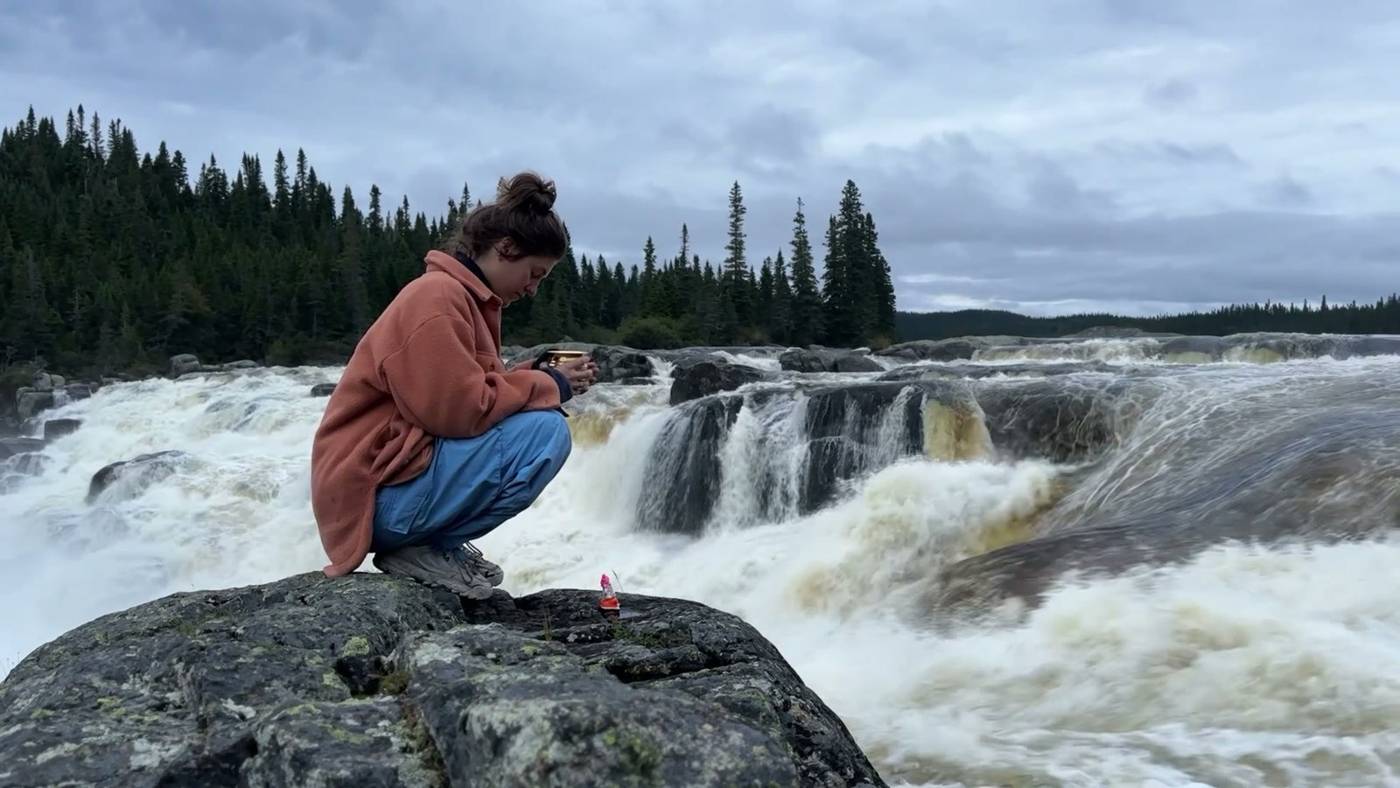
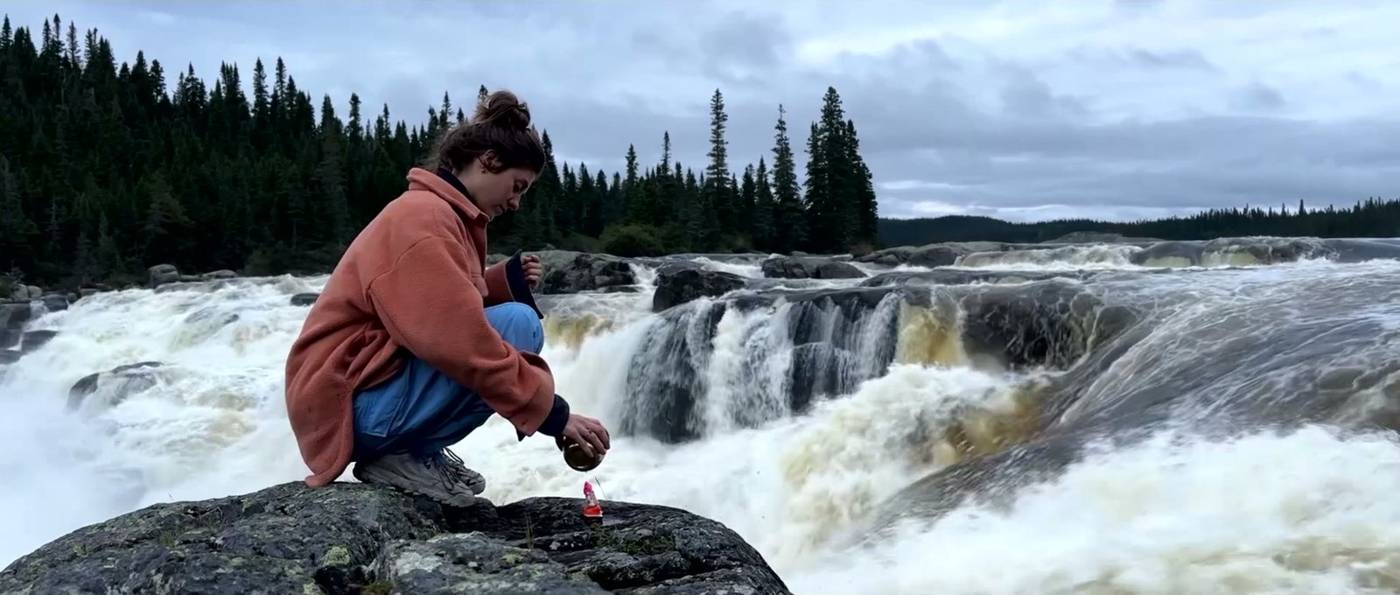
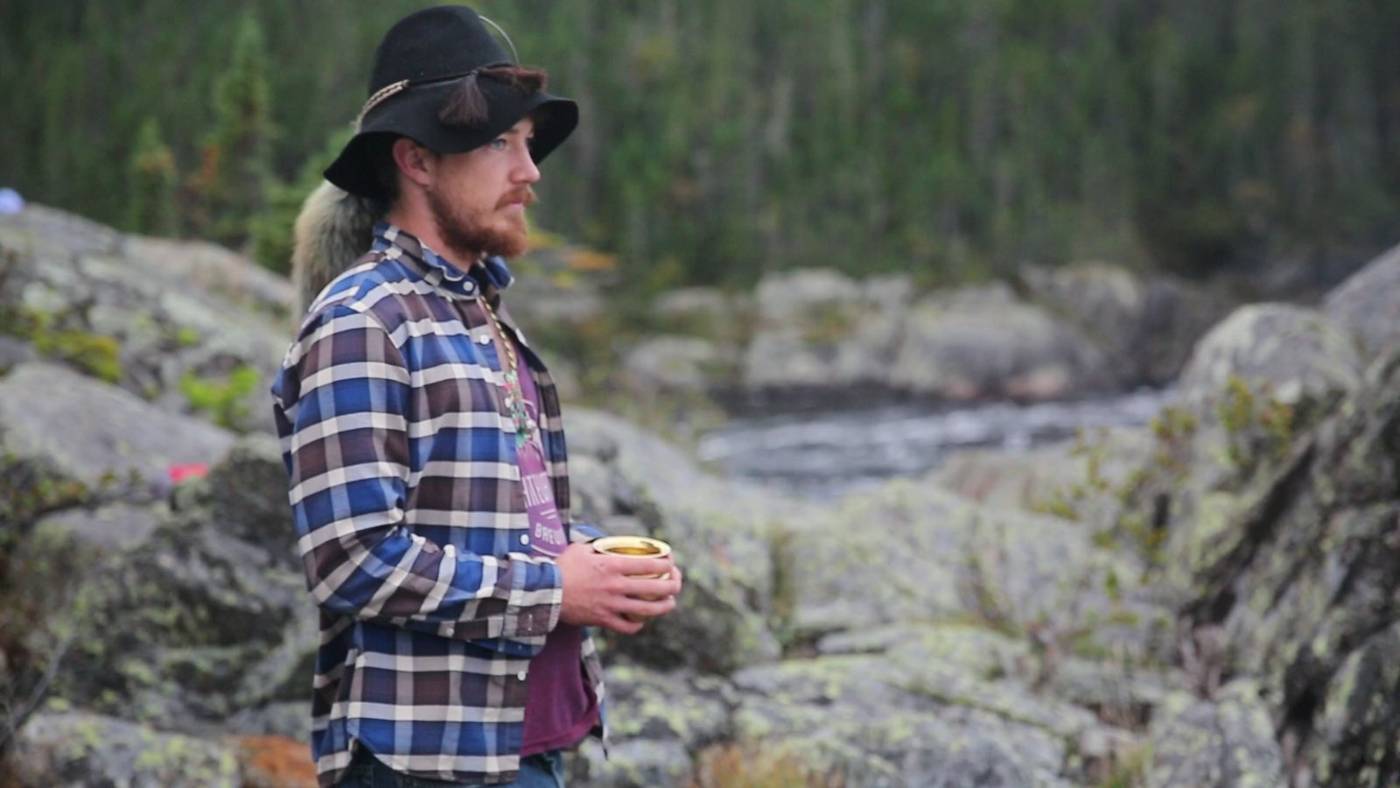
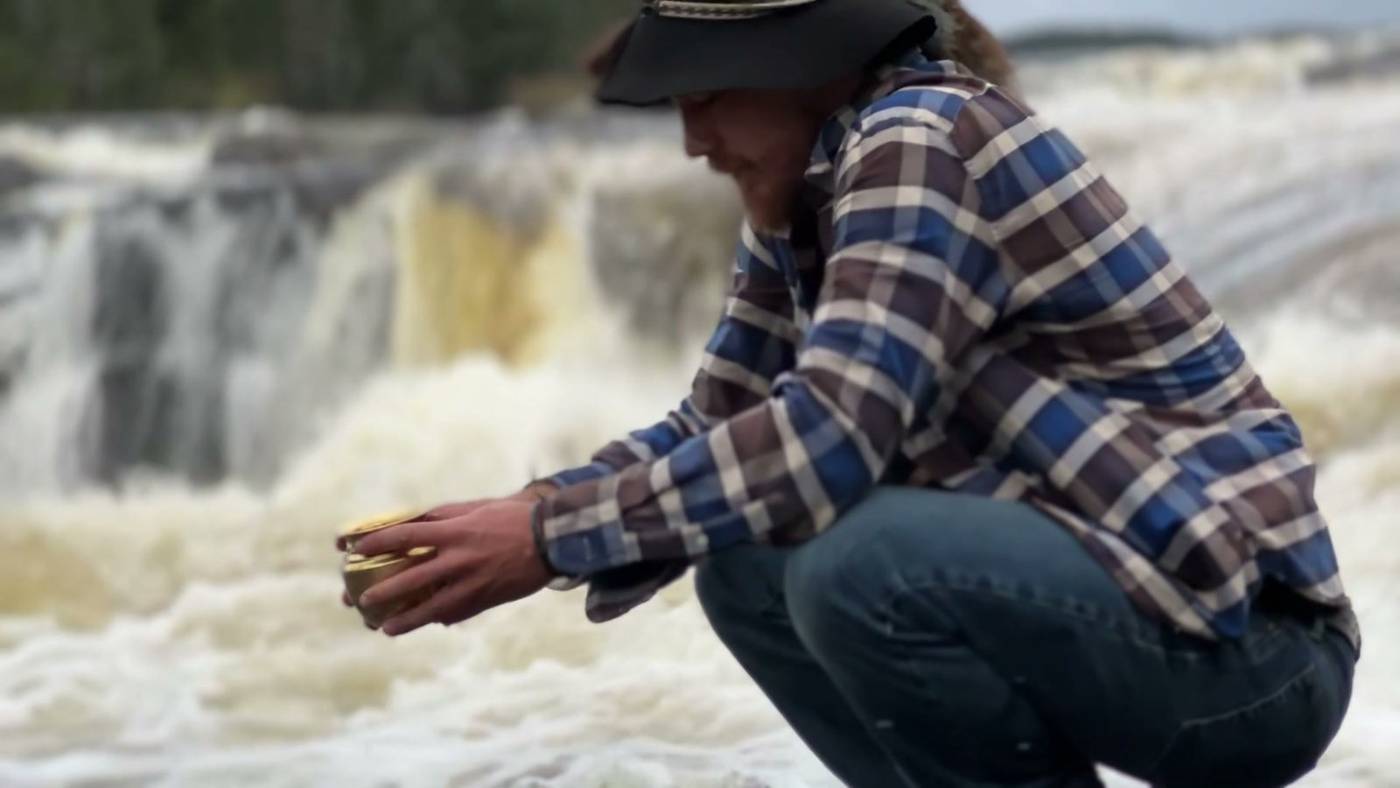
I grew up Hindu in Toronto, in a tradition that has called rivers holy for three thousand years. So we kept Ganesh day on the road: a brass vessel at the water’s edge, small offerings set down on the wet rock. A ceremony from one river, performed at another, beside a law that had only just written down what that tradition had always said.
offerings on the wet rockJake Baer and the brass vessel
Dhingra is a Punjabi name. Whatever else I am, I carry five rivers in my surname without ever having been asked. I suspect that is true of everyone: we all carry the names of rivers we did not choose, and we all drink from water that someone else is waiting for downstream.
Chapter xiii
Five Loves
Vipāś, Śutudrī · the Vedic names of the Beas and the Sutlej, the two rivers a poet once asked, very politely, to let his people cross
There is a hymn in the Rigveda in which a sage named Viśvāmitra stands with his people on the bank of two rivers in flood, the Vipāś and the Śutudrī, the Beas and the Sutlej, and asks them to let him cross.
He does not dam them. He does not curse them. He asks. He praises them, calls them mothers, explains where his people need to go. And the rivers answer him. They say they will bend low for him, the way a mother bends to her child, the way a young woman leans toward the man she loves, and they let the people pass.
It is one of the oldest poems in the world, and it is a poem about how to cross someone else’s current: by asking. I have always heard in it the whole ethic of this book. You do not get across a river by force for long. You get across by respect, and by being answered.
Each of the five rivers taught the Punjab a different kind of love. This is what I hear in each.
~ ~ ~
Jhelum · dignity
In 326 BCE Alexander of Macedon crossed the Jhelum, which the Greeks called the Hydaspes, in a night of storm and rain, and defeated the Punjabi king Porus on the far bank. The historian Arrian tells what happened next. Porus was brought before the victor, wounded, tall, unbowed. Alexander asked how he wished to be treated. Porus said: as a king. Alexander gave him back his kingdom and more besides.
Every argument has a loser. Every relationship survives or fails on what happens after. The loser keeps their dignity, and the winner honours it, or the river between them turns to blood. The Jhelum teaches that the most important moment in a fight is the one after it is over.
Chenab · trust
The Chenab is the river of lovers. Waris Shah set his Heer on its banks in 1766, where Ranjha the flute player comes downriver to the ferry and falls asleep on the bed Heer keeps on the boat, and she finds him there, and that is the beginning. But the Chenab’s deepest story is Sohni’s.
Sohni was a potter’s daughter in Gujrat, married against her will. Her lover, Mahiwal, kept buffalo on the far bank of the Chenab. Every night Sohni swam the river to reach him, holding a baked clay pot to keep herself afloat. Her sister-in-law discovered the secret, and one night she swapped the fired pot for one that had never been through the kiln. On the bank the two pots looked exactly the same. In the middle of the river the unbaked clay softened, dissolved, and gave way, and Sohni drowned.
The story flowed downstream. In the eighteenth century Shah Abdul Latif, the great Sufi poet of Sindh, sang Sohni’s crossing in his Risalo, and in his hands she does not drown so much as dissolve into the beloved. The same water carried the same story from the Punjab into Sindh.
What carries you across must be fired. Trust is clay that has been through heat. Unbaked promises look identical to baked ones while you are standing on the bank. Only the river can tell them apart, and it tells you in the middle, when it is too late to turn around. Before you swim, ask what has been through the kiln.
Ravi · union
Guru Nanak spent the last years of his life farming at Kartarpur on the bank of the Ravi. The story told about his death is that his Hindu and Muslim followers argued over whether his body should be cremated or buried. When they lifted the sheet, they found only flowers, and each took half.
In 1947 the new border put Kartarpur in Pakistan, a few kilometres from India, and for seventy years Sikh pilgrims stood on the Indian side and looked at it through binoculars. In November 2019 a corridor opened so they could walk across without a visa. A river taught a border how to open a door.
The Ravi has grown thin since then. Most of its water is now taken upstream, and in Lahore it is often a trickle. Union is not a thing achieved once. It is a flow that has to be kept running, or the river that held two peoples together becomes a dry bed with a line drawn down the middle of it.
Beas · turning back
At the Beas, which the Greeks called the Hyphasis, Alexander’s army stopped. They had been marching for eight years. They had crossed half the known world. On the bank of this river they refused to go one step further. Alexander shut himself in his tent for three days. Then he came out, built twelve great altars on the bank, and turned for home.
It is near the Beas, too, at Sultanpur Lodhi, that Guru Nanak went into the little river called the Kali Bein to bathe and did not come out for three days. When he emerged, the first thing he said was there is no Hindu and there is no Muslim. He came out of the water having turned back from every division he had been taught.
Every relationship has a Beas: the river where you stop conquering and turn toward home. The greatest general of the ancient world learned there that loving the people who follow you can mean refusing to take them further. One of the bravest things a lover can do is stop pushing.
Sutlej · the line
In 1809, at Amritsar, Maharaja Ranjit Singh and the British East India Company signed a treaty that made the Sutlej the line between them. Sikh power to the north and west of the river, British power to the south and east. For more than thirty years the line held.
A boundary drawn on water is an honest boundary, because everyone knows water moves. Nobody pretends a river line is permanent. It holds as long as both sides keep agreeing it holds, and that is the truth about every boundary between people too.
Where the Beas meets the Sutlej, at Harike, the water spreads into a wide marsh, and every winter birds fly in from Central Asia and Siberia to rest there. Harike is now a protected wetland. The line between two waters, the place where one river is subsumed into another, became the place where travellers from the other side of the world come to rest. What looks like a border from the bank is a refuge from the air.
Chapter xiv
Upstream
Darya · the word the people of Sindh use for the Indus. It means, simply, the river
The hardest thing the Punjab teaches about relationships is geography.
Whoever is upstream has power, whether they want it or not. A dam in the hills decides the harvest on the plain. A canal dug in one province decides how much water reaches the next. The upstream people are rarely cruel. Mostly they are simply using their own water. That is exactly what being upstream feels like from the inside: not like power at all, just like living your life.
Sindh has been downstream for centuries. It receives everything the Punjab sends, and everything the Punjab keeps. In 1991 the provinces of Pakistan signed an accord dividing the waters of the Indus between them, and Sindh has argued ever since that the water it was promised does not arrive, and has fought every proposal for a new dam above it.
At the very bottom of the river, the Indus delta is starving. It was once one of the great deltas of the world. Now so little fresh water and silt reaches the coast that the sea is walking inland. The mangroves are thinning. Farmland near Thatta and Badin has turned to salt. People there describe the sea arriving at villages that used to be a day’s walk from it. The delta is what happens to the people at the end of a relationship who are never asked what they need.
The river’s own creatures know this. The Indus river dolphin, the bhulan, lives nowhere else on earth. It is nearly blind; in water that thick with silt there is little to see, so it finds its way, and finds its kind, by sound. The barrages built across the Indus have cut its river into separate rooms, and the dolphins in one room cannot reach the dolphins in the next. They call through the water to whoever is within reach.
~ ~ ~
And over all of it there is a border.
In 1947 Partition drew a line through the Punjab, and the rivers did not consent to it. Headworks ended up on one side and the canals they fed on the other. In 1960, with the World Bank as broker, India and Pakistan signed the Indus Waters Treaty. The three eastern rivers, the Ravi, the Beas and the Sutlej, went to India. The three western rivers, the Indus, the Jhelum and the Chenab, went to Pakistan. The treaty held through the wars of 1965 and 1971 and through Kargil in 1999, and for a long time it was spoken of as one of the most durable water agreements in the world. In April 2025, after the killings at Pahalgam, India declared that it was holding the treaty in abeyance.
The rivers kept running.
This is a book about love, and I will not pretend to arbitrate between nations in it. But the shape of this story is familiar to anyone who has loved across unequal power. Every relationship has an upstream partner. The one with more money. The one with more options, more family nearby, more freedom to leave. The upstream partner almost never feels powerful. They feel like they are just using their own water.
Everything upstream is held in reserve for someone below.
So here is the ethic of the upstream, as plainly as I can put it. If you are upstream, remember that someone below you drinks. Tell them before you build a dam. Release enough water for the river below you to stay alive, even when you could use it yourself. Go downstream sometimes and look at the delta with your own eyes.
And if you are downstream, measure. Keep records. Speak. The delta’s grief has to be heard upstream or it will not be heard at all, because water does not carry sound uphill.
Shah Abdul Latif, who lived beside the Indus in the eighteenth century, wrote of the river as a beloved and of the seekers who travel toward it. He knew, as people at the bottom of rivers always know, that everything comes to them in the end. The water, the silt, the stories, the poison, the grief. The downstream people are the ones who know the whole river, because the whole river passes through them.
Part Four
The Wider Water
Four journeys outward: a river that is rivals with itself, two oceans that meet where no one is looking, an island that shares its water by prayer, and the rivers the world has begun to call persons.
the map isn’t finished
Chapter xv
The Rhône
Rhône · from Latin Rhodanus, probably from a Celtic root meaning to run, to roll. One river, two countries, about eight hundred kilometres from ice to salt
If you want to see a whole relationship in one river, follow the Rhône from its glacier to the sea. It has everything: an anxious source, a reservoir, a confluence that refuses to mix, a border, a rivalry, a lover, an inheritance, and a delta where the horses run white.
From ice to salt: the whole book in one river.The source, under blankets · Valais, Switzerland
The Rhône begins as the Rhône Glacier, high in the Swiss Alps above the village of Gletsch. The glacier has been retreating for over a century, and visitors who come to walk into the ice grotto carved through it find something surreal: every summer, parts of the ice are wrapped in enormous white fleece blankets to slow the melt. People are tucking the source of a river into bed so that it will not leave them so fast.
I understand the impulse completely. It is what every anxious parent does, and every anxious lover: wrap the thing you love in blankets so it will not change. The blankets help a little at the edges. They cannot stop a glacier from becoming a river. That is what glaciers are for.
The reservoir · Lake Geneva
The young river pours into Lake Geneva, rests there, drops its silt, and comes out at the other end in the city of Geneva clear and blue. In the middle of the city a dam, the Seujet, decides how much of the lake is let go. The upstream country holds the water. Remember that.
The seam · La Jonction
A little below the dam the Rhône meets the Arve, which comes down from the glaciers of Mont Blanc carrying ground-up rock and runs grey, almost milky. At the point the Genevans call La Jonction the two rivers enter one bed and do not mix. For a long stretch you can stand on the railway bridge and look down at a single river that is blue on one side and grey on the other, a clean seam between them. Eventually the bends and the rapids braid them. The Arve’s name disappears. Its silt goes all the way to the Mediterranean.
Not the Rhône: the Magpie. But every confluence has a stretch where two waters share a bed and keep their colours.The rivals · Switzerland and France
Below Geneva the Rhône crosses into France, and here the old meaning of rival comes true. Downstream, France depends on the river to cool four nuclear power stations along its banks, Bugey, Saint-Alban, Cruas and Tricastin, and to irrigate its farms. In hot summers, when the river runs low and warm, French reactors have had to cut their output because the water coming back out would be too hot for the fish. Upstream, Switzerland holds the lake and has its own needs: the shoreline, the boats, the city.
After a severe drought in 2012, France asked for an agreement on how the lake would be managed in dry years. It took fourteen years of talks. On 4 September 2025, in Geneva, the two countries signed a pair of accords: a joint commission for the Rhône, and a system for managing Lake Geneva’s level in which, during floods or droughts, Franco-Swiss crisis units decide together, by consensus. Switzerland agreed to release more water in an emergency at a nuclear plant or an exceptional drought. Forecasts expect the flow of the river and the lake to fall by about a fifth within thirty years. That is why they finally signed.
14 years. two of the most orderly countries in Europe. one lake.
This is what rivals who share a stream look like when they are doing it well. Not friendship, exactly. A long, tedious, unglamorous agreement about who gets what when there is not enough, written down before the drought rather than during it. Most couples argue about the water in the middle of the drought. The Swiss and the French took fourteen years to agree on a crisis unit, and then they built one. Ask yourself whether the two of you have agreed, in advance, how you will share when there is too little: too little money, too little time, too little sleep with a newborn. If you have not, you will negotiate it at the worst possible moment.
The lover · Lyon
At Lyon the Rhône meets the Saône, which comes down slow and wide from the north. The Lyonnais have always treated them as a couple. In French the Rhône is masculine and the Saône feminine, and the city cast them that way: in the early 1700s the sculptor brothers Nicolas and Guillaume Coustou made two great bronze allegories of the rivers, a man and a woman, for the pedestal of the king’s statue in the Place Bellecour. There is an old local joke, usually credited to the writer Léon Daudet, that Lyon is watered by three great rivers: the Rhône, the Saône, and the Beaujolais.
The fast river and the slow river. The impetuous one from the Alps and the patient one from the plains. You can already hear the couples’ therapy. What I love is what happened to the bronzes. For years the Coustous’ river gods sat outdoors in Bellecour, and the people of Lyon used them as benches and footrests; by some accounts, even as bins. In 2021 they were finally taken inside to the Musée des Beaux-Arts and restored. Two gods of the river, worn smooth by people sitting on them. That is a marriage, too: the couple everyone leans on, used every day, rarely looked at, and needing, after a long time, to be brought in out of the weather and cleaned.
The inheritance · the Camargue
At the sea the Rhône divides into two arms and spreads into the Camargue: lagoons, salt pans, rice fields, black bulls, white horses, and flocks of pink flamingos standing in the brackish water. Everything the glacier let go of, everything the lake held and the dam released and the reactors borrowed and the Saône added, ends up here, as land and salt and birds. It is the most alive place on the whole river.
The Rhône has no legal personhood yet. A citizens’ campaign in France has begun to call for it, and scholars have started to study how recognising the river as a person might reform the way it is governed. If it happens, I hope the guardians come from both sides of the border.
Chapter xvi
The Cape of Storms
Agulhas · Portuguese for needles: Cabo das Agulhas, the Cape of Needles, where the compass once pointed true
In 1488 the Portuguese navigator Bartolomeu Dias became the first European to sail around the southern tip of Africa. He had been driven south by storms for days, and when he finally came round and saw the headland behind him he named it Cabo das Tormentas, the Cape of Storms.
His king, João II, renamed it. The king could see what the storms meant: that a sea route to India was open, and that Portugal’s fortunes had turned. He called it Cabo da Boa Esperança, the Cape of Good Hope. Same rocks, same wind, same wrecks. A new name.
Every couple who has lasted has done this at least once. Something nearly sinks you, a betrayal, an illness, a year you would not wish on anyone, and you come round it, and for a while you can only call it the place of storms. Then one day, looking back from calmer water, one of you renames it. Not because the storms were not real, but because of where they turned out to lead. The renaming is not denial. It is navigation.
Where the oceans really meet
Tourists come to the Cape of Good Hope and Cape Point to stand where the Atlantic meets the Indian Ocean. They take the photograph at the dramatic place: high cliffs, crashing surf, the end of the world. But the official meeting point of the two oceans is about 150 kilometres to the east-south-east, at Cape Agulhas, the true southern tip of Africa. It is low, rocky and quiet. Fewer people go.
We do this with love. We tell the story of where we met at the dramatic place: the night, the party, the airport, the first kiss. The real meeting, the point where two lives actually began to become one water, was usually somewhere flatter and quieter that nobody photographed. A Tuesday. A long drive. A kitchen.
Two currents
The two oceans do not meet politely. Up the Atlantic side runs the Benguela Current, cold, rising from the deep south and flowing north along the coast of Namibia, rich with nutrients and fish. Down the Indian Ocean side runs the Agulhas Current, warm, fast, one of the strongest currents in the world, pouring south-west along South Africa from the tropics.
Where the Agulhas runs into big swells driven up from the Southern Ocean against its flow, the sea stacks up into some of the most dangerous waves on earth. Ships have been broken in half by waves that seem to come from nowhere. When two powerful forces run straight against each other, the water does not average out. It rises into a wall.
But the Agulhas does something else, and this is the part I love. South of Africa it bends round in a great loop, called the retroflection, and turns back toward the Indian Ocean. As it turns, it sheds rings: huge whirlpools of warm Indian Ocean water, hundreds of kilometres across, that break off and drift away into the cold Atlantic, carrying their warmth and their salt for months, even years. Oceanographers believe these rings matter to the circulation of the whole Atlantic.
Some people pass through our lives the way the Agulhas passes Africa. They come close, they turn back, they never fully join us. And they leave rings of warmth behind, whole pockets of their ocean adrift in ours, long after they have gone.
The needle
Agulhas means needles. One explanation for the name is that when the Portuguese passed that point around 1500, their compass needles pointed due north, true north, with no magnetic deviation at all. Today they no longer do; the earth’s magnetic field has moved. But I like to keep the story. At the quiet place where two oceans really meet, the needle told the truth.
Chapter xvii
Subak
Tri Hita Karana · Balinese: the three causes of wellbeing, harmony between people, between people and nature, and between people and the gods
I live in Bali now, and the water here is governed by prayer.
For about a thousand years Balinese rice farmers have shared their water through the subak, cooperative associations of the farmers who draw from the same channel. Water comes down from the volcanic lakes, through springs, rivers and hand-cut tunnels, and is divided again and again between the terraces. Each division is marked by a shrine. At the top of the system, beside the crater lake of Mount Batur, stands the temple of Dewi Danu, the goddess of the lake, and its high priest. Down the mountain, temple by temple, the priests and the farmers decide together when each subak will flood its fields and when it will let them lie fallow. In 2012 UNESCO listed the system as a World Heritage cultural landscape, in the name of Tri Hita Karana.
In the 1970s the Green Revolution reached Bali. Advisers told farmers to stop following the temple calendar and plant new high-yield rice as often as they could, every field on its own schedule. Within a few years pests and disease spread through the terraces. Water ran short where it was needed and sat where it was not. In the 1980s and 1990s the anthropologist Stephen Lansing, working with the ecologist James Kremer, built computer models of the water temple network and found that its schedules were not superstition. By flooding and fallowing whole blocks of fields at the same time, the temples starved the pests of food, and by staggering the blocks down the mountain, they shared the water so that no one went dry. A thousand years of ritual had solved a problem the engineers had not even seen. Lansing’s book about it is called Priests and Programmers.
What strikes me, living here, is that the ritual is the coordination. Nobody in a subak negotiates their water fresh each season. They do not need to. The ceremony tells everyone when, and because everyone does it together, it works. The same thing that makes the system holy makes it fair.
Couples need rituals for the same reason. Not because ritual is romantic, though it can be, but because it settles in advance the things that would otherwise be argued about every week. When we eat together. When we rest. When we each get our own water, and when the whole terrace lies fallow so that something can recover. The Sunday walk, the shared calendar, the agreed day off from each other: these are small temples on the channel. They decide, quietly, who gets what and when, so that nobody has to fight about it.
Bali’s longest river, the Ayung, runs past temples where people bathe in tirtha, holy water, to be cleansed. Water here is never only water. It is a gift that has to be passed on, terrace to terrace, until it reaches the sea.
Chapter xviii
The Persons an atlas
The rivers on the film’s map, each with the lesson it seems to me to carry. Rights first, then the waters still waiting.
It is happening on every inhabited continent, as if remembered from a single source.
A high court in the Himalayas. A tribal council on the Pacific coast. A parliament in a delta country. An Innu nation on the north shore. Different languages, different laws, and one old conclusion: the river is alive, and what is alive has rights. These are the waters on our map. I have tried to say plainly what each did in law, and then, more freely, what each knows about love.
Vilcabamba 2011
Loja, Ecuador
A road project dumped rubble into the river. Under Ecuador’s 2008 constitution, which gives Nature itself rights, two residents sued on the river’s behalf, and a provincial court ruled for the river.
someone has to speak up for the one who can’t
Atrato 2016
Chocó, Colombia
Colombia’s Constitutional Court recognised the river as a subject of rights and named guardians from the communities who live along it alongside the government.
love needs guardians, not just feelings
Whanganui 2017
Aotearoa New Zealand
Te Awa Tupua: a legal person, “an indivisible and living whole from the mountains to the sea.” Two guardians, one appointed by the iwi and one by the Crown, speak for it together.
two banks, one voice
Ganga & Yamuna 2017
Uttarakhand, India
A state high court declared both rivers living persons in March. By July the Supreme Court of India had stayed the ruling. Rights given and withdrawn within one monsoon.
a declaration is not a relationship
Birrarung 2017
Melbourne, Australia
Victoria recognised the Yarra and its lands as “one living and integrated natural entity,” in a law whose title is partly in the Woi-wurrung language: Wilip-gin Birrarung murron, keep the Birrarung alive.
call them by their own name
Turag 2019
Bangladesh
The High Court declared the Turag, and with it every river in the country, a living entity, and appointed the national river commission as guardian. The Supreme Court upheld it.
in a delta, everyone is downstream
Klamath 2019
California, USA
The Yurok Tribe declared the river’s rights of personhood. Then, in 2024, the last of four dams came down. Within weeks salmon swam past the old dam sites for the first time in a century; by 2026 some 20,000 chinook had come back.
take the dam down and see what comes home
Loire 2019 →
France
No statute yet. A writer and a group of citizens convened the Parlement de Loire, a long series of hearings asking what the river would say if it had a seat.
before rights: listening
Magpie 2021
Côte-Nord, Québec
The Innu Council of Ekuanitshit and the Minganie municipality declared Muteshekau-shipu a legal person with nine rights, and guardians to defend them. Our first chapter.
the law caught up with what love already knew
Mar Menor 2022
Murcia, Spain
After the lagoon suffocated, more than 600,000 citizens signed for a law. Spain passed it, Europe’s first legal personhood for an ecosystem, and in 2024 its Constitutional Court upheld it.
sometimes it takes the dying to make us sign
Marañón 2024
Loreto, Peru
The Amazon’s main source-stem. Kukama women of the Huaynakana Kamatahuara Kana federation, tired of oil spills, sued; a court at Nauta recognised the river’s right to exist and to flow, and named them its guardians.
the people who drink from you know you best
Wabigoon next
Ontario, Canada
Poisoned by mercury in the 1960s, still contaminated, and still without rights. The film’s second chapter.
what we owe the ones we poisoned
And the waters still waiting, which are on the map not because any court has spoken but because the work does not end with the cases already won: the Nile, the oldest river ever held holy; the Yangtze and the Volga, Mother Volga, each the mother river of a civilisation; the Mekong, Mother of Waters, crossing six countries; the Po, Italy’s great river, drought-struck in 2022 with the sea pushing tens of kilometres up its delta; the Citarum in Java, for years called the most polluted river on earth and now being cleaned by soldiers and scientists; the Ayung in Bali; the Okavango, ending in sand; the Aral, emptied; the Jordan, running down to the Dead Sea; the Rhône; and the Cape where two oceans meet.
Sept 17 · Ekuanitshit
The people for whom she was always a person. The river runs straight through the town, and the town barely looks up. They don’t need to look. It has always been there, and they have always known what it is.
Ekuanitshit. The people who knew first.
Part Five
Currency
Money learned to move by watching rivers, and it still speaks their language.
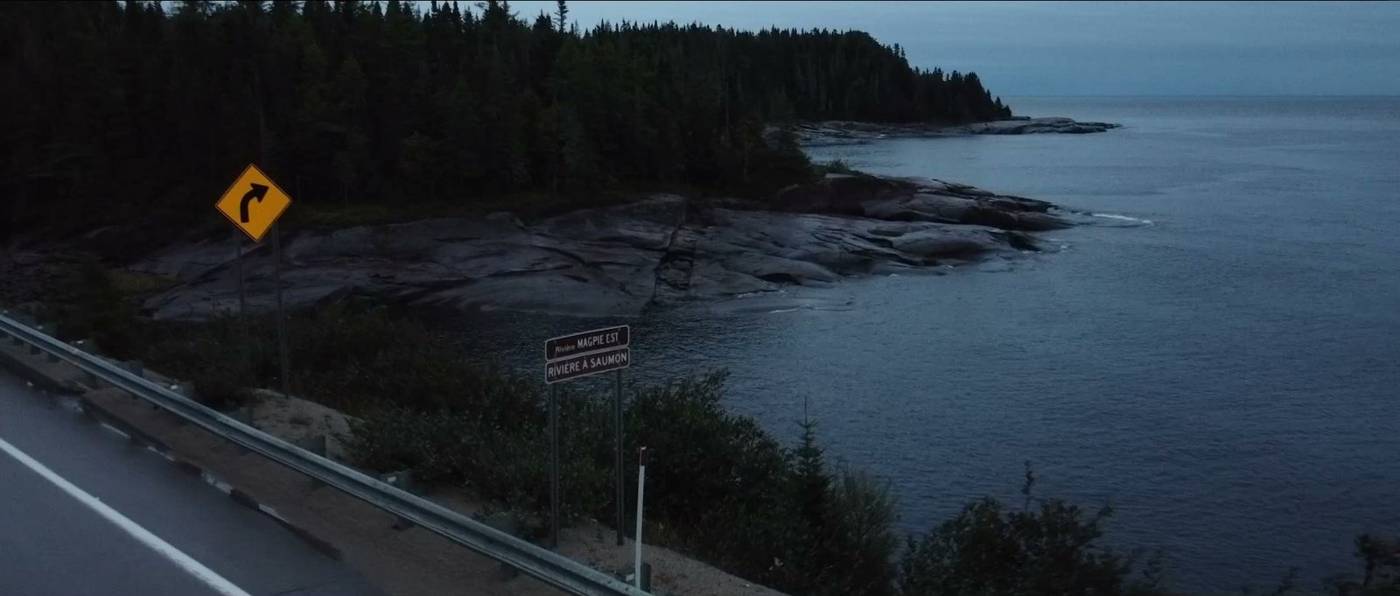
liquid · flow · frozen · underwaterRoute 138. The sign says MAGPIE OUEST. The road follows the river because everything does.
Chapter xix
Current, Currency
currency · from Medieval Latin currentia, a flowing, a current, from currere, to run
Money is called currency because it runs.
Listen to how we talk about it. We speak of liquid assets and cash flow. Accounts are frozen. Capital takes flight. Markets are flooded with cheap credit, and then the credit dries up. A company stays afloat or goes under. We keep a float. We are underwater on a mortgage. Central banks provide liquidity. The whole vocabulary of money is hydraulic. We have always imagined money as water, because the first economies were river economies, and they learned to count by watching the flood.
Mesopotamia means “between the rivers.” On the plain between the Tigris and the Euphrates, the first cities grew out of irrigation, and the first accounts were records of grain grown on watered land. The temples lent barley and silver to farmers and expected more back at harvest.
The Sumerians had a word for that more. It was máš, and it also meant a young goat, a kid: the natural increase of a herd. Interest was imagined as the offspring of a loan. The Greeks did the same thing two thousand years later. Their word tokos meant both a child and the interest on money. Aristotle hated it. Money, he said, is barren. A loan that breeds more money is making something give birth that was never alive, and of all ways of getting rich it is the most against nature.
Underneath that ancient quarrel is a river question. Can money breed the way a flood breeds a harvest, by spreading over the land and leaving something fertile? Or can it only breed the way a whirlpool does, by pulling more water into the same small circle?
~ ~ ~
Some of the oldest written laws in the world are about a riverbank and a debt.
The code of Hammurabi, carved in Babylon around 1750 BCE, says that if a man is too lazy to keep his dyke strong, and the dyke breaks and the water floods the fields, he must repay the grain that was lost. If he cannot, he and his goods are sold to pay for it. Liability, in the oldest law we have, was born at the edge of a canal. You owe your neighbour for what your neglected bank lets through.
In Egypt the flood itself was the economy. On Roda Island in Cairo there still stands a Nilometer, built in 861, a stone column in a stepped well connected to the river and marked in cubits. Each summer officials read the height of the flood on it. If the water rose too little there would be hunger; too much, and villages would be swept away. The reading set the year’s taxes. The first economic indicator in history was a gauge on a river.
Money between two people is a current too, and that is why couples fight about it so often and so bitterly. Each of you grew up in a different watershed of money. In one, it flooded and then vanished. In the other it trickled, steady and small, and was never spoken of. When you join your lives you join those two currents, and the seam between them runs right through the middle of every bank statement. Do not mistake the seam for a failure. Read the gauge together. Agree on what level counts as a flood, and what counts as a drought.
Chapter xx
The Bank
bank · two words with one ancestor. The riverbank from Old Norse, a ridge of earth; the money bank from Italian banca, a bench. Both from an old Germanic word for a raised shelf
The money-changers of medieval Florence and Venice did their business sitting at benches in the open air. The Italian word for such a bench was banca.
When a money-changer could not pay what he owed, the story goes, his bench was broken in the square, so that everyone could see he was finished. Banca rotta, a broken bench. That is where we get bankrupt.
The bank of a river comes from the other side of Europe, from the Norse word for a ridge of earth. But the two words are cousins. Both go back to an older Germanic word for a raised shelf or bench, something built a little higher than the ground. Etymologically, a bank of either kind is the same thing: a place raised beside the flow, where you can stand without being swept away.
In Lyon, as we saw, the people used their two bronze river gods as benches for years. The river and the bench, cast in one object. It was the most honest thing the city could have done with them.
That tells you what a bank is for. It is not the river. It holds the river, shapes it, and lets people use it without drowning. A bank that tries to become the river, that tries to keep all the water for itself, stops being a bank. It becomes a dam, or it bursts.
The Bounder’s tail-lights. Some banks are only tape and good faith, and they hold anyway.
A bank run is a flood in reverse. Everyone wants their water back at the same moment, and the bank discovers it was never holding all of it at once. It never could. A bank lends most of what it holds; that is what it is for. A riverbank is the same. It never holds the year’s whole flow at one time. It holds a shape, and trusts that the water will keep arriving and keep leaving at roughly the rate it always has. Both kinds of bank run on that trust. Both fail in a panic.
~ ~ ~
In a relationship, the banks are the shared structures: the joint account, the promises, the routines, the rituals you keep. They are benches built beside the current so that two people can sit down together next to something that never stops moving.
They fail in two ways. Some are too rigid, concrete channels that hold the water perfectly and let nothing live. The others fail from underneath.
Rivers do this to their banks all the time. On the outside of a bend, the current eats away the soil below the waterline, out of sight, while the grass on top stays green and the bank looks solid from the path. Geologists call it an undercut bank. It holds, and holds, and then one day a whole section collapses into the water at once, and people who walked along it the week before cannot believe it was ever hollow.
That is how most trust breaks. Not with the visible lie, but with the slow erosion underneath: the small evasions, the things not mentioned, the account checked in private. The bank looks the same from above until the moment it is gone. Walk your banks. Look at the waterline, not at the grass.
Chapter xxi
Dams
environmental flow · the quantity, timing and quality of water a river needs below a dam to stay alive
Economists distinguish between a stock and a flow. A reservoir is a stock. A river is a flow.
Wealth is a stock and income is a flow. Savings are a stock and spending is a flow. Both matter. A life with no reservoir has no defence against drought. A life that is all reservoir has stopped being a river.
Dams are among the most powerful things people have ever built. They store water for the dry season, turn turbines, stop floods, and make deserts bloom. They also kill deltas.
When the Aswan High Dam was finished on the Nile in 1970, it ended the annual flood that had renewed Egypt for five thousand years. The silt that had once spread across the fields now settles at the bottom of Lake Nasser, and the Nile delta, starved of it, has been retreating into the Mediterranean. The Colorado River, dammed and diverted at every turn for the cities and farms of the American West, now rarely reaches the sea at all. Its delta in Mexico, once a great green wetland, is mostly dry.
River scientists have a name for what a dam owes the river below it. They call it the environmental flow: the amount of water, released at the right times and of the right quality, that the river downstream needs in order to stay a living river. In 2007, hundreds of scientists and water managers gathered in Brisbane and declared that environmental flows were essential to the health of rivers and the people who depend on them. A dam that releases nothing is not storing water. It is killing everything below it, slowly, and calling it prudence.
The north shore at dusk. Every river is owed its way to the sea.
Hoarding is a dam with no environmental flow. It happens with money, and it happens with love. We all build reservoirs, and we should: savings, independence, a private self, time that belongs to no one else. The question is never whether to have a reservoir. It is what you release downstream. Generosity is environmental flow. It is the water you let go of so that the life below you can go on, even though you could have kept it, even though keeping it would have been easy to justify.
And sometimes the dam comes down. On the Klamath, on the border of Oregon and California, four hydroelectric dams had blocked the salmon for a century. The Yurok, Karuk and other tribes fought for decades to remove them; in 2019 the Yurok declared the river a person. In August 2024 the last of the four was breached. Within weeks, salmon were swimming past the old dam sites into water their species had not reached in living memory. By 2026 researchers counted more than twenty thousand chinook back in the river, faster than almost anyone had predicted. Take down what has been holding a river back and you find out what was waiting downstream to come home.
~ ~ ~
There is one more water word in finance, and it is a warning.
In the nineteenth century, cattle drovers in America were known to feed their herds salt on the way to market and then let them drink as much as they could hold just before the sale, so that the animals would weigh more on the scales. The trick has long been tied to the name of Daniel Drew, a drover who became one of the most notorious speculators on Wall Street. When companies later began issuing shares worth far more than their real assets, people called it watered stock.
Watered stock is water pretending to be substance. In love it is the inflated promise, the grand gesture made the night before the scale, the declaration that weighs more than the life behind it. Learn to tell a heavy animal from a thirsty one. Wait a day after the drinking, and weigh again.
Chapter xxii
Water Rights
Te Awa Tupua · the Whanganui River as a living whole, from the mountains to the sea. In New Zealand law since 2017, a legal person
There are two old laws of water, and they are two theories of love.
The first is the riparian law of England and the eastern United States. Under it, you have a right to use the water of a river because you live beside it. Your right comes from nearness. But it comes with a duty: you may use the water reasonably, and then you must let it pass on to your neighbour downstream, not much diminished in quantity or quality. Everyone on the bank shares the river, and everyone owes the next person a river worth having.
The second is the law of the American West, called prior appropriation, and its motto is first in time, first in right. Whoever first dug a ditch and put the water to use holds the senior right, and in a drought the senior right is filled in full before the junior rights get a drop. Nearness means nothing. Seniority is everything. And if you stop using your water, you lose your claim to it. Use it or lose it.
Most of us preach the first law and practise the second. We say love is a shared river that we owe each other undiminished. Then, in the dry years, we count who got there first, whose needs are senior, who has been using their claim and who has let theirs lapse.
~ ~ ~
In our own century a third law has appeared, and it is stranger and older than both.
In 2008 Ecuador wrote into its constitution that nature itself, Pachamama, has the right to exist, to persist, and to regenerate its cycles. In 2011 a provincial court in Loja enforced that right on behalf of the Vilcabamba River, which a road project had been choking with rubble. In 2017 the Parliament of New Zealand passed the Te Awa Tupua Act and recognised the Whanganui River as a legal person: an indivisible and living whole from the mountains to the sea, incorporating all its physical and metaphysical elements. The Māori tribes of the Whanganui had argued for that recognition for well over a century. Their saying is Ko au te awa, ko te awa ko au. I am the river, and the river is me.
In 2021 the Magpie followed, the river we drove to in the Bounder. The Innu of Ekuanitshit and the municipality of Minganie declared it a person with rights of its own, and named guardians to speak for it.
These laws are young, and they are fragile. The Community Environmental Legal Defense Fund, which helped write some of the first of them, warns in its 2025 State of Rights of Nature report that many such declarations remain symbolic, that the destruction of rivers goes on regardless, and that a right means little unless someone can enforce it. That warning belongs in any honest account. A river does not become safe because a council has spoken. It becomes safer because people keep showing up to speak for it.
Under the Whanganui law, the river is represented by two people who act together as its human face, Te Pou Tupua. One is appointed by the river’s own tribes. The other is appointed by the Crown. Two guardians from opposite banks, speaking with one voice, for the water between them.
I can think of no better image for a marriage, or a friendship, or a partnership of any kind. The relationship itself has rights. It is not only you, and it is not only me. It is the third water, the one neither of us brought, and it can be a party with standing. When we fight, someone has to speak for it. Ideally, both of us: two guardians from opposite banks, appointed by different families and different histories, who agree, whatever else they disagree about, to protect the river.
An epilogue
Muteshekau-shipu
Muteshekau-shipu · the Innu name of the Magpie River: three hundred kilometres of whitewater through the Côte-Nord
Sept 17 → 18 · the Magpie
Camped at the river by dusk on the 17th. At the falls by 05:44 on the 18th. You don’t argue with her. You sit down.
The falls were the loudest thing I have ever stood beside.
The whole weight of the river comes down through the forest and throws itself over the edge, and keeps throwing itself, all day and all night, and has done so since the ice went back. Standing there I understood what the trip had been trying to teach me for nine days. Pure freedom, pure existence. This is what it means to be alive: forever throwing yourself over the edge, falling into grace. She did not care at all about personhood. And to see that much freedom is to remember that it lives, unclaimed, in us as well.
the whole caravan, at the edgeall that freedomJake and the brass vesselin the spray
So we did the strange, human, hopeful thing. Having found the river sacred, we agreed with the Innu and the council that she should be clothed in personhood: not to raise her up, but to protect her from us. To give the law time to catch up with what the people of Ekuanitshit always knew.
On the way home the caravan did what rivers do. Some of us frayed, some re-formed, some went their own way, and at Tamworth we came apart and scattered in every direction. The Bounder had to be towed one last time. It never really recovered. I used to think of that ending as the trip falling apart. Now I think it was the delta.
Here is everything I learned, in one breath. We begin as something else, as snowmelt and pressure and the slope of land we did not choose. We are defined by what moves through us more than by what we keep. We are held by banks that we shape as they shape us. We dig canals toward people the land would never have brought us to. We meet other waters and run beside them unmixed until the hard miles braid us. We flow into the people downstream of us whether we see them or not. We share streams with our rivals. We flood and we dry up. Some of us run only after rain. Sometimes the bigger river pushes us backward and we hold its flood until it turns. And in the end we spread out, give away what we carried, and enter something larger than ourselves.
The Magpie went on without us, down through the canyon, past the falls, out to the Gulf, as it had every day for ten thousand years, and as it will long after this book. It did not need us to be a river. But for a few days it let us stand on its bank. That is all any of us can ask of the people we love: to stand on their bank a while, to drink, to give something back to the water, and to let it keep going.
The next river is the Wabigoon. The map is not finished. This is a life’s work, carried river to river, for as long as there is water left to speak for.
The Magpie, morning of the 18th.
A practice
The Grammar, in Twelve Words
The film’s field notes, as they were sketched at Tamworth. Each word is a thing rivers do, a thing people do, and something to try. Do them at a real river if you can. A sink will do.
Confluence where two waters meet
Two lives in one bed. Try: name one way you are still unmixed, and let it be a seam, not a fault.
Flow vitality in motion
A bond that stops moving begins to die. Try: for one week, notice what passes between you each day rather than what you have stored.
Tributary the smaller streams
The friendships and family that feed the main channel. Try: thank one tributary, out loud, this week.
Eddies the turning back
The places a relationship circles. Try: name your recurring argument and decide together whether it is a resting place or a whirlpool.
Subsume taking in
Every person you love rewrites your shape. Try: name one thing in you that came from them, and tell them.
Dams structures that control flow
Boundaries, necessary until they stop the water being water. Try: name what you release downstream every season, no matter what.
Canals waterways we build to connect
The digging toward each other. Try: dredge one silted conversation.
Ephemeral rivers water that comes and goes
The brief encounters that leave a mark. Try: write to someone who flowed through your life only once.
Consumption one river absorbing another
Letting go of a separate self for a deeper one. Try: ask whether that letting-go was chosen, and by whom.
Merging two souls becoming one current
Still two waters. Try: each describe the third water between you, separately, then compare.
External pressures forces acting on the river
Money, distance, time, family: the weather. Try: agree now, before the drought, how you will share when there is too little.
Individuality & unity one, and yet two
The whole art of it: to become one with another and remain wholly yourself. The river does this without trying. Try: spend an afternoon apart, then come back and tell each other what you saw.
After
Notes and Sources
Etymologies follow the Oxford English Dictionary and Douglas Harper’s Online Etymology Dictionary. Journal entries follow the trip’s dated footage, 10–22 September 2023. Where a story is legend or tradition, the text says so.
Before the Water and the journey
Magpie River resolutions, Innu Council of Ekuanitshit and MRC de Minganie, February 2021: Earth Law Center; CBC News.
Two-Eyed Seeing (Etuaptmumk), Elder Albert Marshall, Mi’kmaw Nation.
All photographs are frames and stills from the journey, from Rivers of Life, Chapter One: rivers-of-life.tan-peak.workers.dev. The drawings are new.
Part One · The Grammar of Water
Heraclitus, fragment 12 (Diels–Kranz), after Charles Kahn, The Art and Thought of Heraclitus, 1979.
Grand Canal of China: UNESCO World Heritage listing, 2014. The pound lock is credited to Qiao Weiyue, 984 CE; see Joseph Needham, Science and Civilisation in China, vol. 4.3.
Meeting of Waters, Manaus; Triveni Sangam, Prayagraj.
Flying rivers: Antonio Donato Nobre, The Future Climate of Amazonia, 2014.
Community Environmental Legal Defense Fund, State of Rights of Nature Report 2006–2025, 2025, celdf.org.
Rivers of Life · Tan Dhingra · 2026 Photographs from the journey to the Magpie, September 2023. Drawings made for this book. Set in Cormorant Garamond, Newsreader, Reenie Beanie and Permanent Marker. Download the print edition (PDF, 116 pages)